QIE Machinery
QIE Machinery
QIE Machinery
QIE Machinery

Venezuela’s palm oil sector operates as a rapidly growing agricultural industry that currently aims to bridge a substantial gap between domestic production and national demand. While the nation is globally famous for its massive crude petroleum reserves, oil palm cultivation has emerged as a highly attractive business opportunity for local farmers and agro-industrial investors looking to diversify the economy.
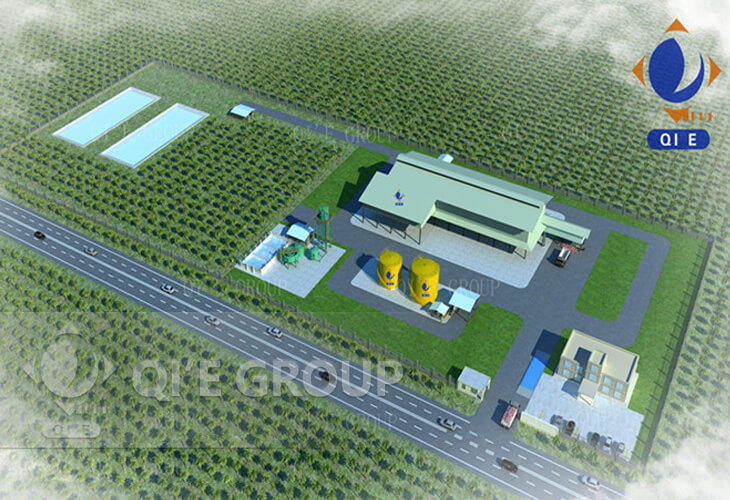
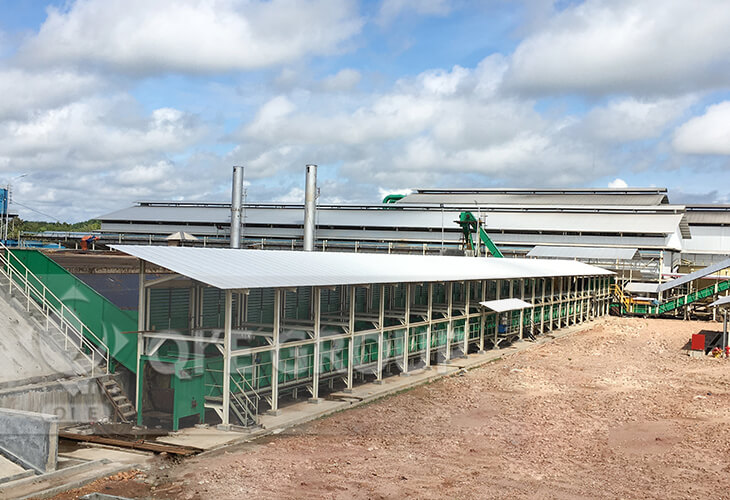
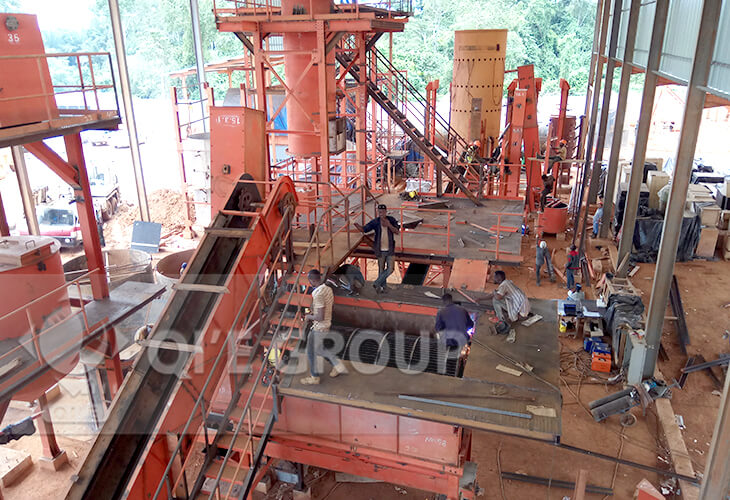
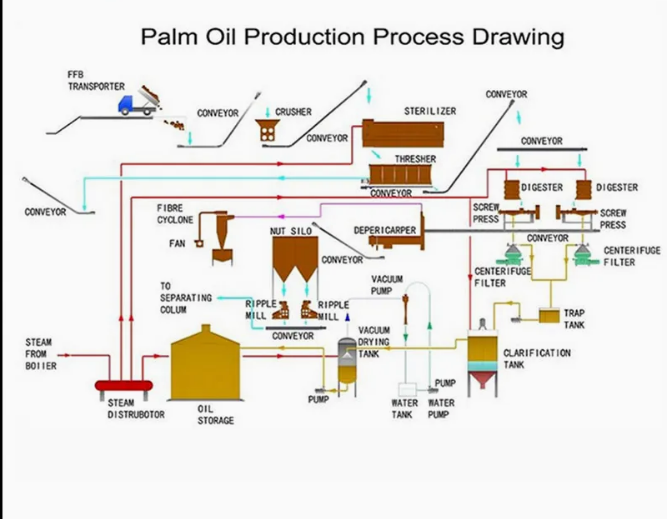
Transforming fresh palm fruit into premium, market-ready refined edible oil requires a highly specialized, multi-stage production sequence. We offer comprehensive, turnkey palm oil processing plant solutions that manage every phase of your project lifecycle—from initial factory layout design and advanced machinery manufacturing to on-site installation, debugging, and operational handover. Our complete palm oil mill plant are custom-engineered to accommodate diverse industrial needs, offering flexible capacities ranging from 1 TPH to 120 TPH (Tons Per Hour).
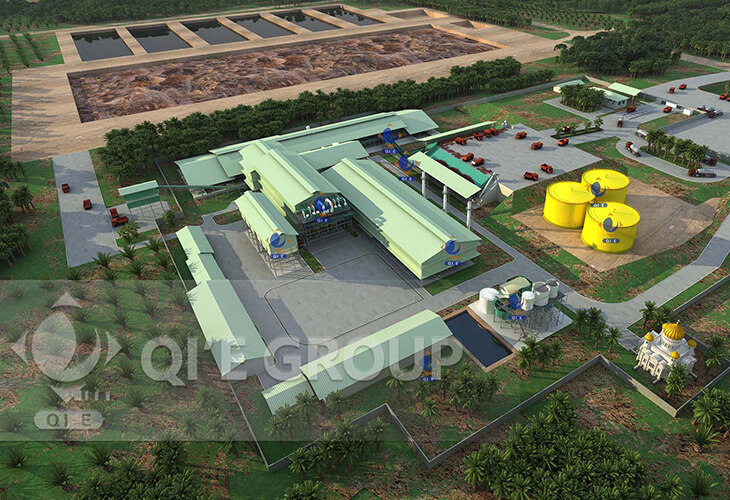
The complete palm oil production process is designed to transform freshly harvested fruit into high-value edible oils and industrial raw materials. The production line is divided into two primary phases: milling, which extracts Crude Palm Oil (CPO) from the fruit pulp, and refining, which purifies the crude extract into neutral, shelf-ready Refined, Bleached, and Deodorized (RBD) palm oil. Operating as a zero-waste loop, modern plants also feature secondary recovery streams that crack residual nuts to extract premium Palm Kernel Oil (PKO), while converting leftover organic fibers into biomass fuel to self-power the factory’s steam boilers.
1. Reception Station
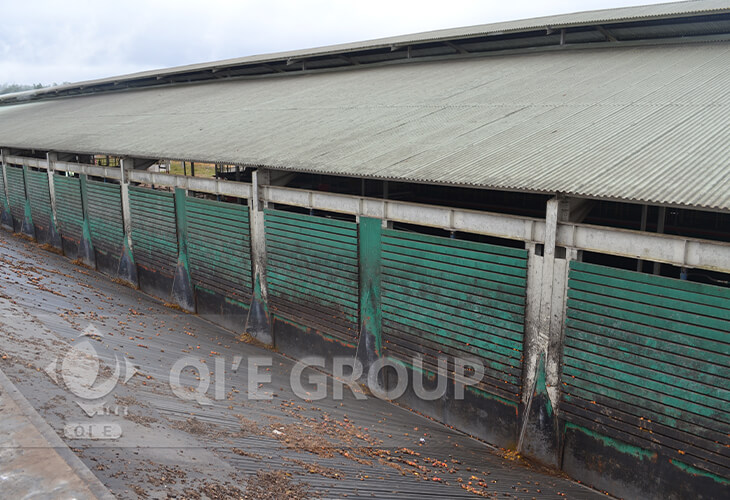
The fresh palm fruit bunches are sent into the factory through the weighbridge to weight the raw materials and to calculate the production cost. Palm bunches reception process is finished at loading ramp. This loading ramp makes palm fruit unloading,cleaning, storage platforms, adopting all hydraulic segmented discharge.
2. Sterilization Station
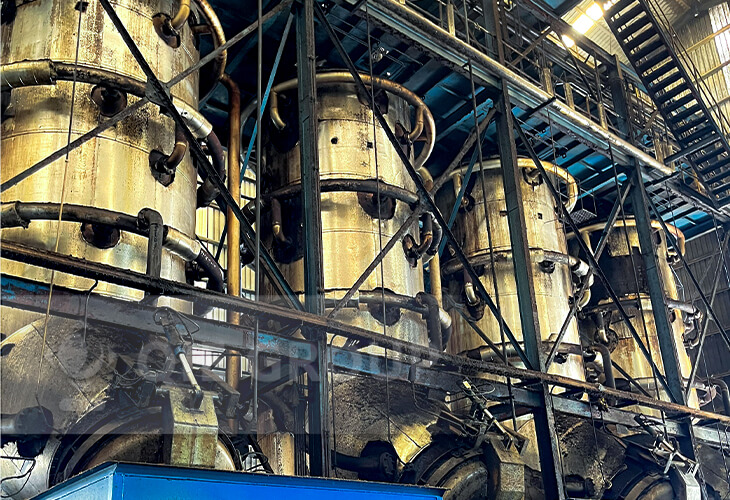
After being transported to the sterilizer, steam will be injected directly inside to weaken the activity of the enzyme, which prevents it getting rancid, to ensure the high quality of the pressed crude palm oil. Meanwhile, it is soft enough for later treshing processing. We have designed both horizontal and vertical sterilizer for larger and smaller line.
3. Threshing Station
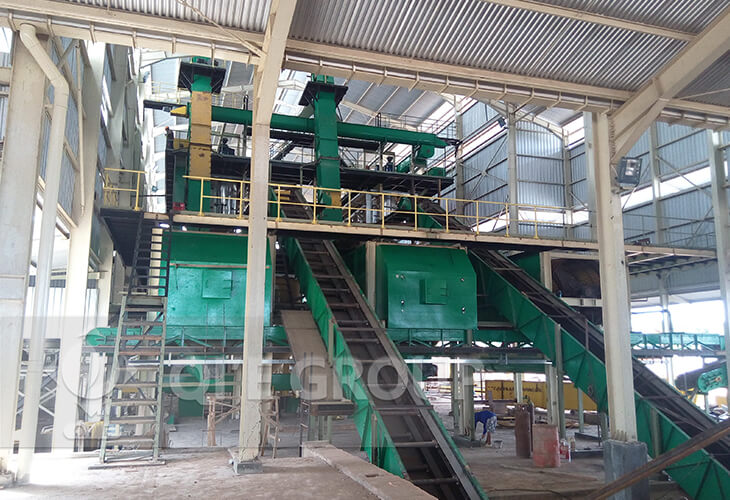
The rotating drum in the thresher separates palm fruits from the bunches. Palm fruit will be conveyed to the digester through elevator, the empty bunch to the outside part through scraper conveyor. Spindle adopts on time forging technology, it makes the equipment solider and more durable. Non spindle tresher is also designed, it is driven by the link chain. It can save the producing cost in a large scale palm oil plant.
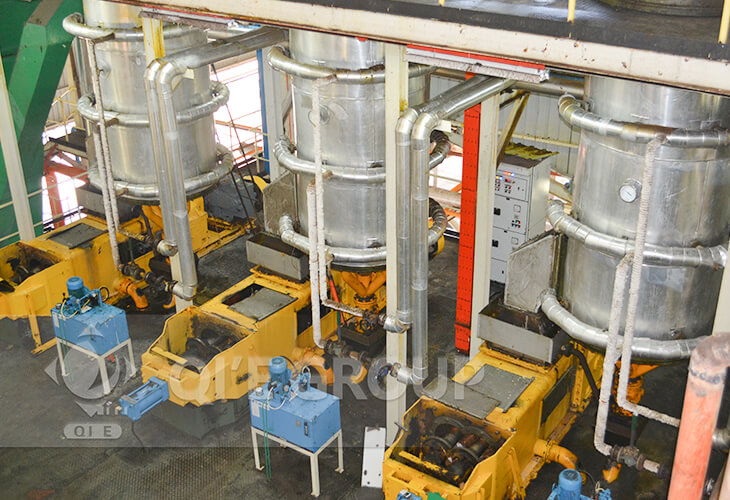
4. Digesting and Pressing Station
The digester is used to adjust moisture and temperature of the palm fruit, finally to increase the extraction rate of the palm oil. The digester adopts liquid level control system, which can distribute the material all by itself. To realize the automatic working.
The presser adopts hydraulic control system to adjust the distance of different pressing worms, it is applicable to different kinds of palm fruits, and it can ensure the high oil extraction rate.The palm fruit oil yield increase by adjusting material moisture and temperature in digesting tank.digesting tank uses liquid level control, so material can distribute automatically and equipment runs fully automatically. Pressing machine uses hydraulic control system to adjust spacing between pressing bolts. So it can be suitable for various palm fruit species and guarantee the oil yield.
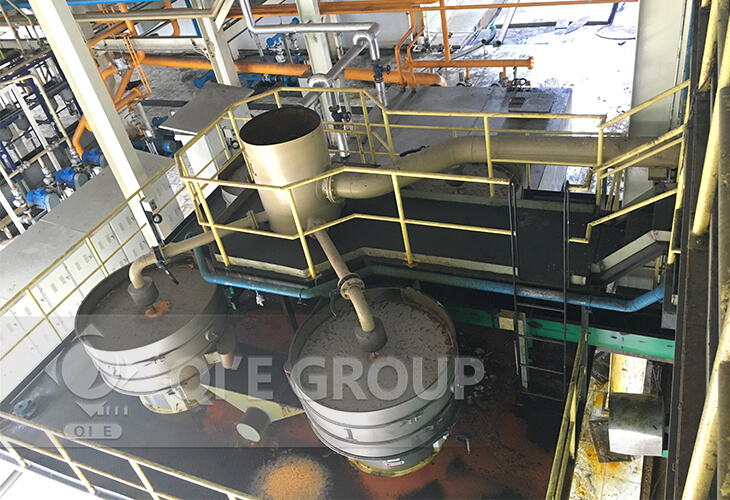
5. Clarification Station
Using the latest technology, under the condition of ensuring the good quality of the oil, reduce the equipment cost as much as possible, reduce the loss of the oil, in the practical producing ,the new technology can make the loss of oil less than 1.3%.
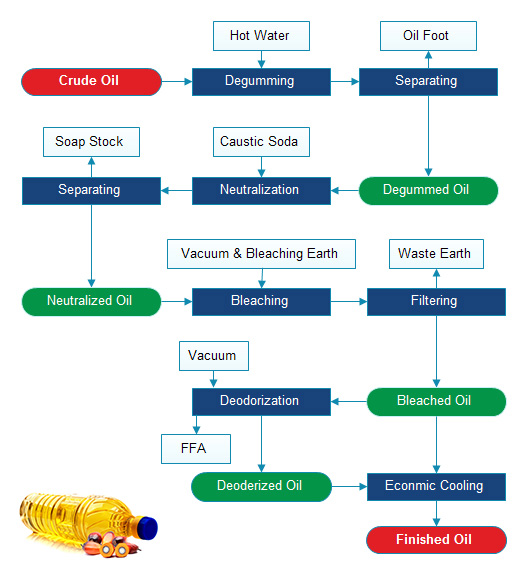
The palm oil refining process transforms dark red, pungent Crude Palm Oil (CPO) into neutral, light-yellow RBD (Refined, Bleached, and Deodorized) palm oil. This purification makes the oil stable, flavorless, and safe for human consumption.Refining is done through either Physical Refining (most common for palm oil due to its high free fatty acid content) or Chemical Refining.
Degumming Section:
This is the first step in refining and is also known as the Pretreatment Process. In the degumming process of palm oil refining machine, the gums are precipitated and separated by the centrifugal separation technique. If the gum content in the oil is low, only gum-conditioning is required to be done and there is no need to go for separate degumming process. The degumming can be carried out in the same neutralization vessel.
Neutralizing Section :
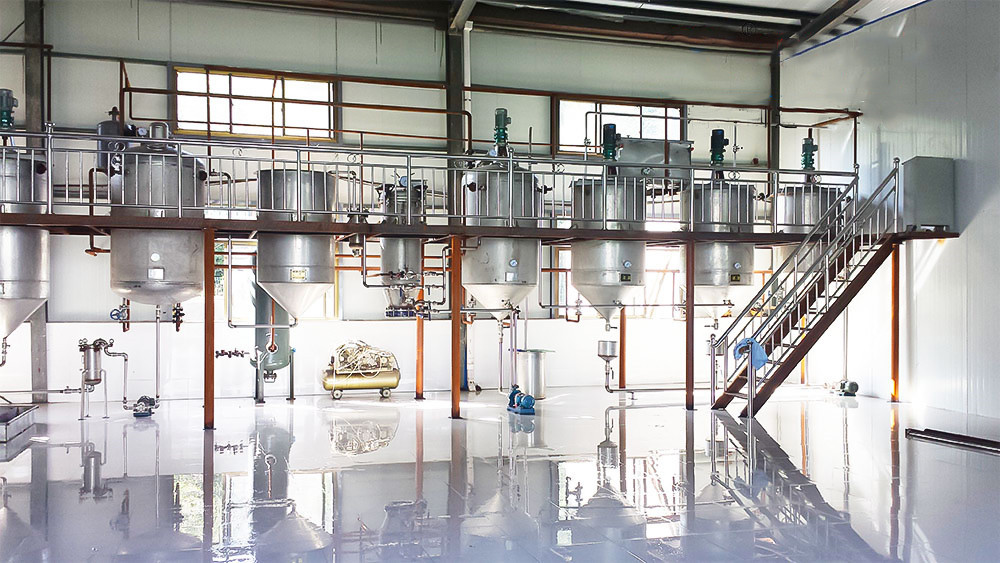
Every cooking oil consists certain amounts of free-fatty acids FFA’s that increase the rancidity in oil and is harmful for human consumption. In neutralization, the FFA’s are removed by reacting them with caustic soda- NaOH in the neutralizer at a certain temperature and performing the stirring. In this way, FFA gets separated in the form of soap stock. QIE Machinery offers neutralization units.
Bleaching Section :
The color pigments in the oil are removed in the bleaching process. The neutralized oil is treated with certain chemicals like activated earth which removes the color from the cooking oil. This process is also carried out under temperature. The bleached oil is then filtered so that the added chemicals and particles are separated from the oil.
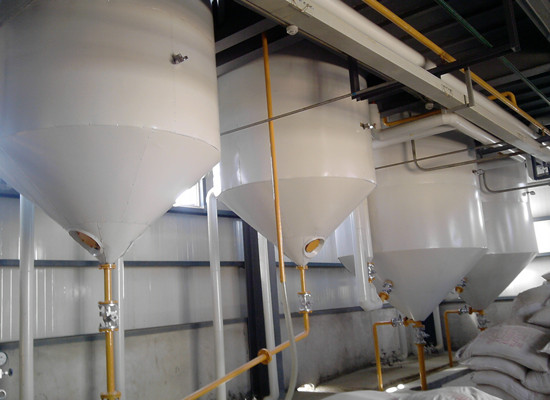
Deodorizing Section :
The deodorization is an important process in the palm oil refining machine. This process is used to remove the odor from the oil. Every oil contains certain typical natural color.
During the previous processes, certain unwanted odor is applied on the oils. The deodorization process removes this odiferous material. It is carried out under high temperature and vacuum systems. At the completion of the process, we get the deodorized-odorless cooking oil.
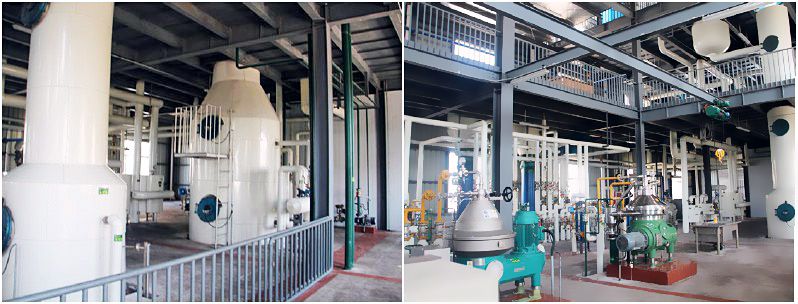
Palm oil fractionation process mainly include crystallization and fliter.Palm oil fractionation plant goes through the control of palm oil cooling and crystallization to make separation of palm oil into low melting point liquid (soft fat) and high melting solid (sterin).
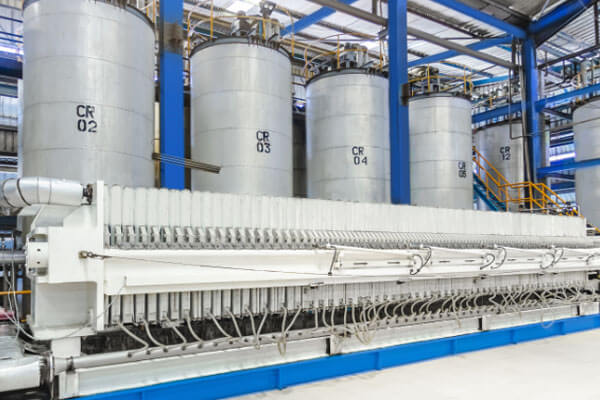
The crystallization process follows in the palm oil fractionation process. This process involves the removal of high-melting glycerides that would cause the liquid oils to become viscous and cloudy at room temperatures.
There are three most important factors in palm oil fractionation process : time, agitation and temperature. Low temperatures will cause the components to separate due to supersaturation while formation of smaller crystals will be facilitated by agitation. With gradual decreases in temperatures, longer crystals will be formed with time.
Palm Oil Fractionation process system is designed to process crude, pre-treated or RBD palm oil. The process is divided in few steps as below.
Feed oil heating
Crystal formation under controlled cooling
Crystal growth
Crystal maturation
Filtration
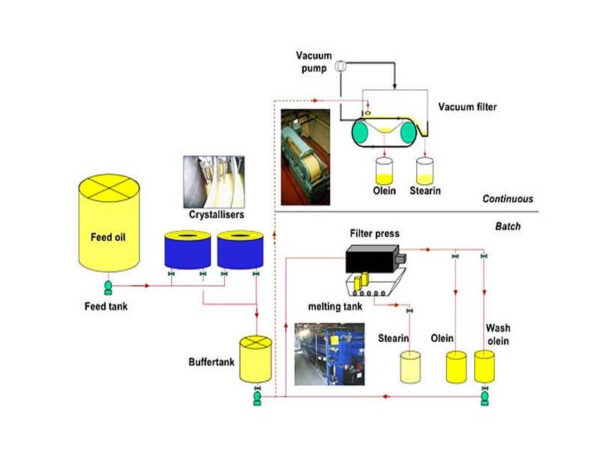
Palm Oil Fractionation Process Description
Dry Fractionation is a process to separate vegetable oils such as palm oil into two fractions, Olein and Stearin, by the crystallization properties of the oils. A typical dry fractionation plant consists of Crystallization Section and Filtration Section.
Crystallization Section
Preheated RBD palm oil is fed into the Henan Doing Company crystallizers and then cooled in a controlled environment to form crystals. The cooling sequence follows a defined program using PLC or programmable controllers. The slurry of crystals and oil is then pumped to the fractionation filter for separation of the solid crystals from the oil.
Filtration Section
In the filtration section, an automated membrane filter press is usually used for filtration of oil slurry to separate the stearin crystals from the liquid olein. Stearin is retained as filter cake while olein passes through the filter as filtrate. Olein yield is maximized by squeezing the stearin cake through inflation of the membrane with air or liquid.
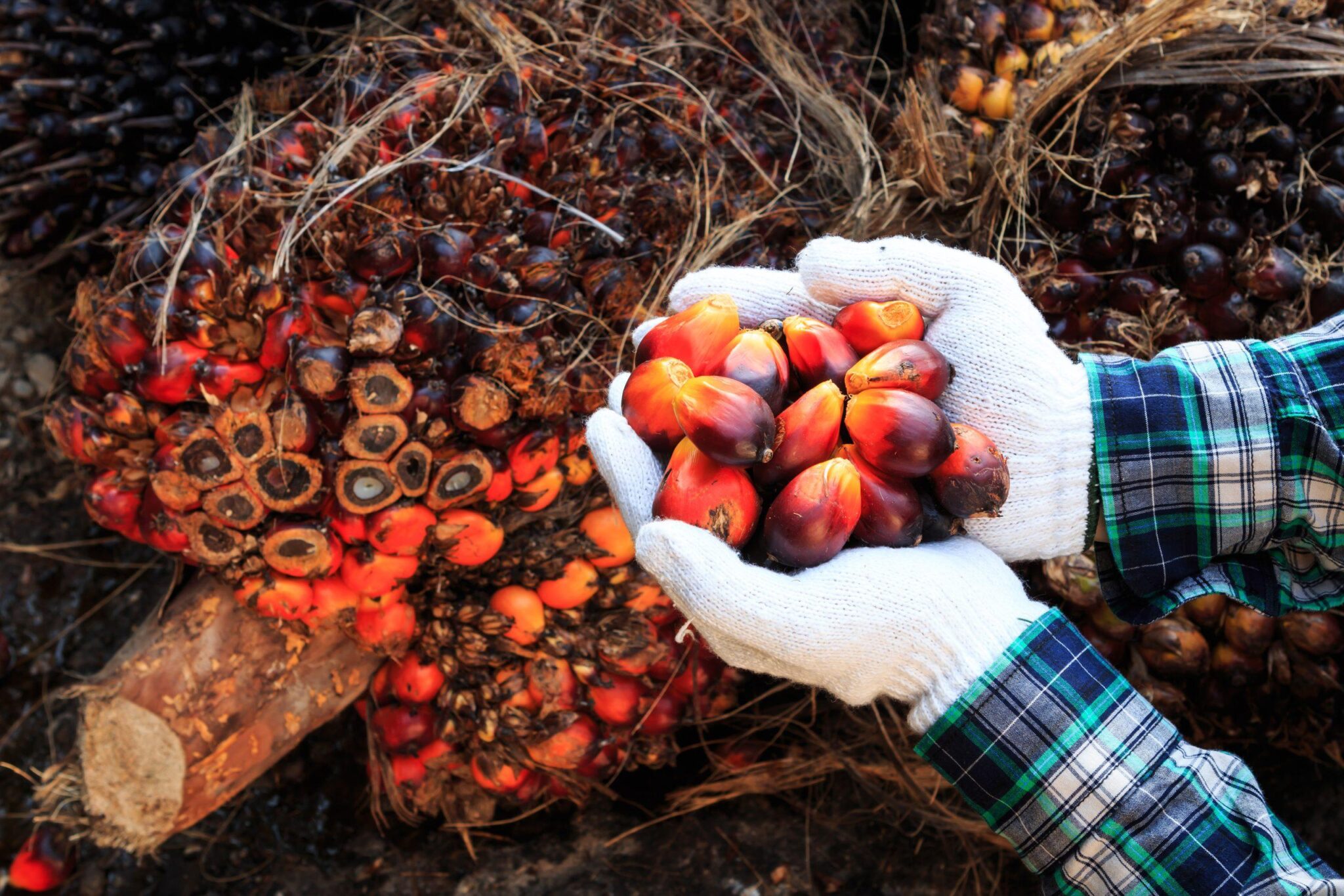
Oil palm has become one of the most promising and strategic crops in Venezuela, positioning itself as a genuine growth opportunity for the agricultural sector. In a global context where palm oil is present in nearly 50% of packaged products, its demand continues to rise, driven not only by the food industry but also by the cosmetic, chemical, and energy sectors, especially with the boom in biofuels.In Venezuela, national production currently covers only a fraction of domestic demand, opening up a wide margin of expansion for farmers and investors. This scenario, combined with international factors such as export restrictions in leading countries, has turned Latin America into a key alternative for global supply, further increasing the strategic value of this crop.One of the main attractions of oil palm is its high profitability. Although it requires patience during its first years—as it begins to produce starting from the third year—its yield can reach between 25 and 40 tons per hectare annually, generating consistent income for decades. Furthermore, its price is usually tied to the international market, providing a degree of economic stability against local fluctuations.Added to this are its resistance to adverse weather conditions and its low risk of theft, characteristics that make it a secure option compared to other, more vulnerable crops. Likewise, oil palm has a lifespan that can exceed 30 years, consolidating itself as a long-term investment.Beyond the economic aspects, this crop also represents a major source of employment and rural development, directly and indirectly benefiting thousands of families. However, its growth must be accompanied by sustainable practices that guarantee environmental protection.
QIE Group is a leading manufacturer specializing in palm oil processing solutions and equipment, we provide complete palm oil processing plant for pressing, refining and fractionation process. More than 42 years’ experience, we are committed to optimizing technology processes, engineer design, project management, installation and training, help customer build the oil mill over the world. When you plan to build an palm oil mill plant in Venezuela, please contact us today to get the quote.


Palm Oil Production Line
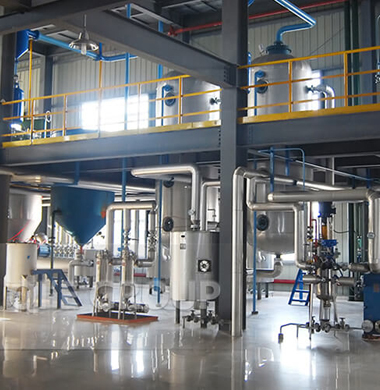
Palm Oil Refinery Plant
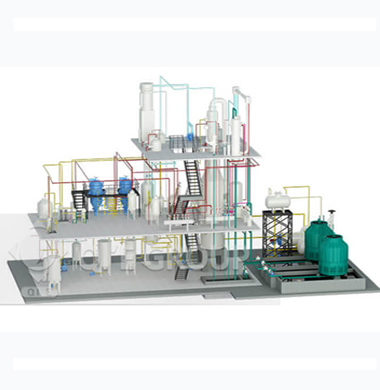
Palm Oil Fractionation Plant

Small Scale Palm Oil Processing Plant
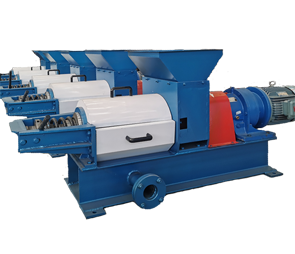
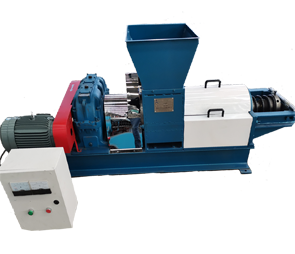
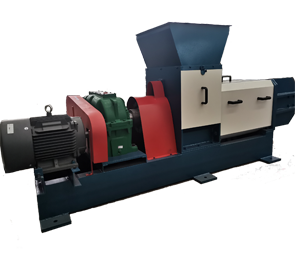
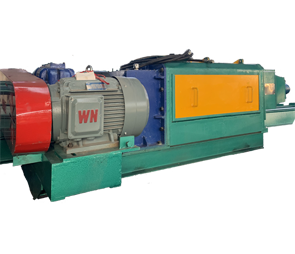
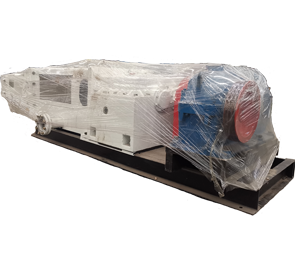
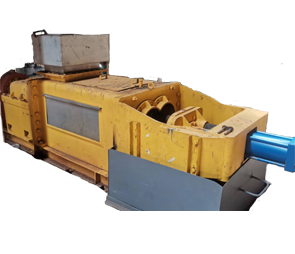
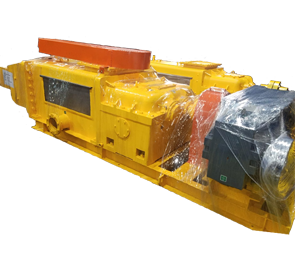
QIE Machinery offers a complete range of core equipment and related auxiliary equipment for palm oil solutions.
Whether you contact us by phone, email, or leave a message online, we will provide you with comprehensive and high-quality services.
Phone: 0086-13949113983
WhatsApp:
Email: qiea@oilpresses.org
Address: No.352 Lianhua Street, Hightech Industrial Development Zone, , Zhengzhou City,Henan Province, China