QIE Machinery
QIE Machinery
QIE Machinery
QIE Machinery

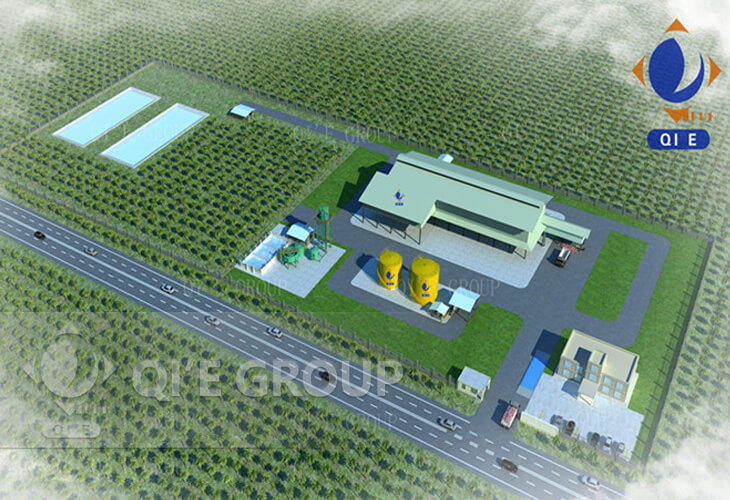
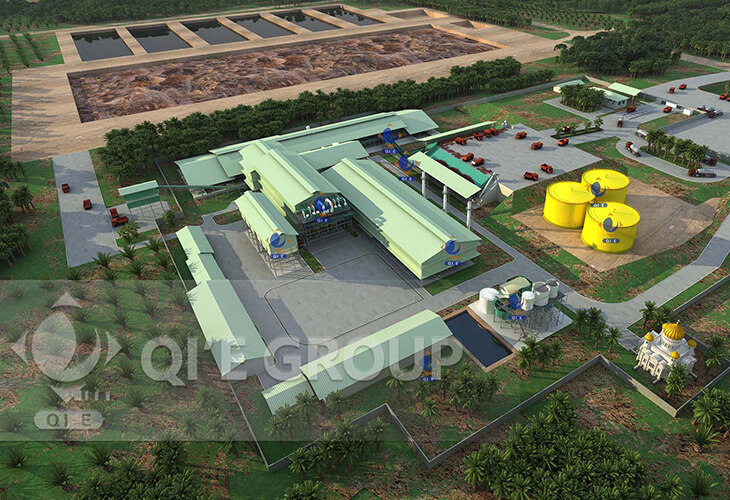
A 1-100 TPH (Tons Per Hour) Complete Palm Oil Production Line Project is an industrial turnkey solution designed to process Fresh Fruit Bunches (FFB) into Crude Palm Oil (CPO). At higher capacities (50–100 TPH), these automated milling lines prioritize mechanical extraction efficiency and biomass self-sufficiency.
Complete palm oil production process in a large-scale palm oil factory. Fresh fruit bunches (FFB) of oil palm after the fruit is harvested, it is processed in a palm oil mill, where the FFB is sterilized, digested, and pressed to extract palm oil. The extracted oil is then clarified and sent to a crude palm oil refinery plant, or fractionation plant.
The first stage in palm oil processing begins with harvesting ripe fresh fruit bunches (FFB). Farmers carefully cut the bunches from oil palm trees and transport them to processing facilities. Since oil quality deteriorates quickly after harvesting, processors must handle the fruit rapidly and efficiently.
Once the fruit reaches the mill, it is weighed and inspected. This step is important because damaged or overripe fruit can increase free fatty acid (FFA) levels, which negatively affect oil quality. Therefore, proper harvesting and transportation play a major role in producing premium-grade palm oil and palm olein.
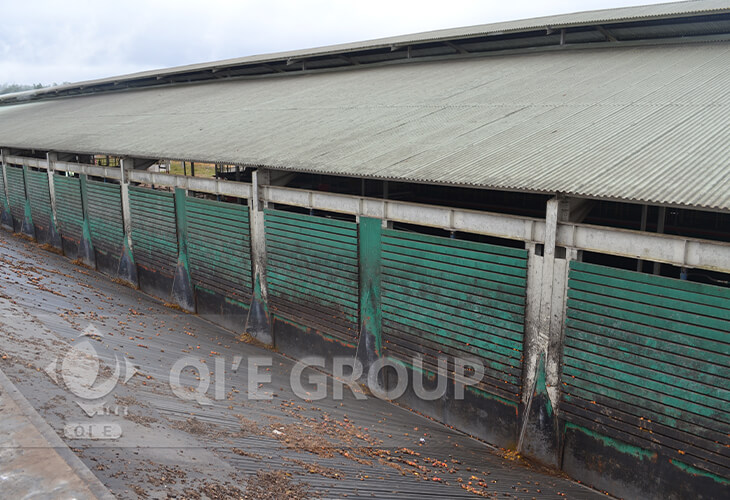
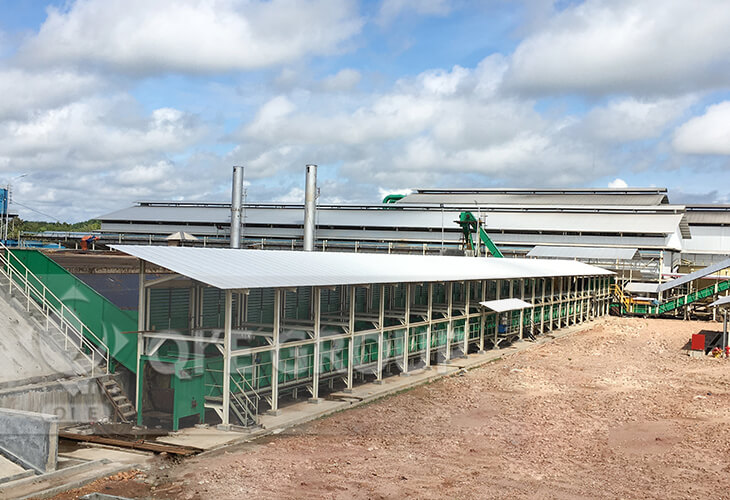
After reception, the fruit bunches undergo sterilization using high-pressure steam. This process is extremely important because it stops enzyme activity that causes oil breakdown. In addition, sterilization softens the fruit, making oil extraction easier during later stages.
Furthermore, heat treatment improves oil recovery by loosening the fruit from the bunches and weakening the pulp structure. Because of this, modern mills rely heavily on efficient sterilization systems to improve extraction rates and maintain oil quality standards.
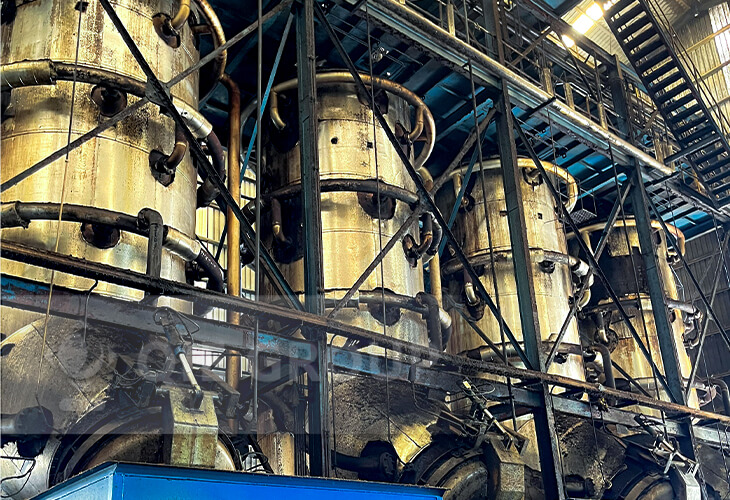
Next, the sterilized bunches move into a threshing machine where the fruits are separated from empty fruit bunches. In large-scale operations, rotating drums are commonly used because they increase efficiency and reduce manual labour.
Meanwhile, small-scale processors may still separate fruits manually. However, mechanized threshing systems save time and reduce processing losses. Consequently, they are widely preferred in commercial palm oil mills.
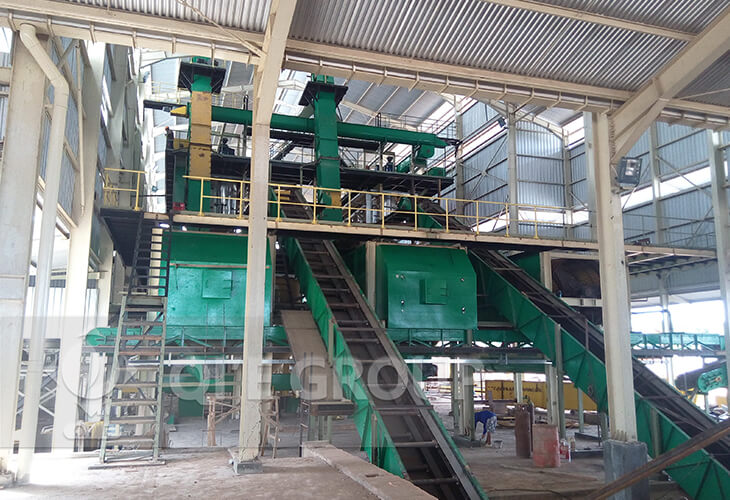
Following threshing, the loose fruits enter the digestion stage. During digestion, heated stirring arms mash the fruit pulp and break down oil-bearing cells. At the same time, the heat lowers oil viscosity, allowing smoother extraction.
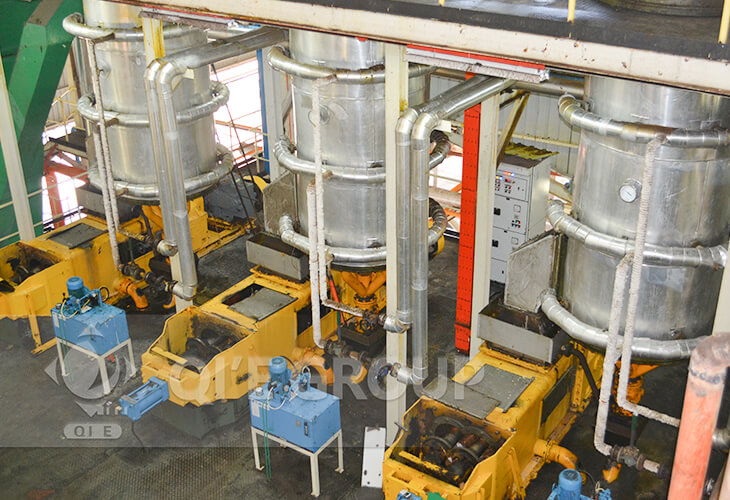
After digestion, the mashed fruit is transferred to screw presses or hydraulic presses for oil extraction. Mechanical pressure squeezes crude palm oil from the fibrous fruit mass. Because screw presses provide continuous operation and higher extraction efficiency, they are commonly used in modern processing plants.
Additionally, efficient pressing reduces oil losses and improves production output. Therefore, selecting the right extraction equipment is crucial for profitable palm oil processing.
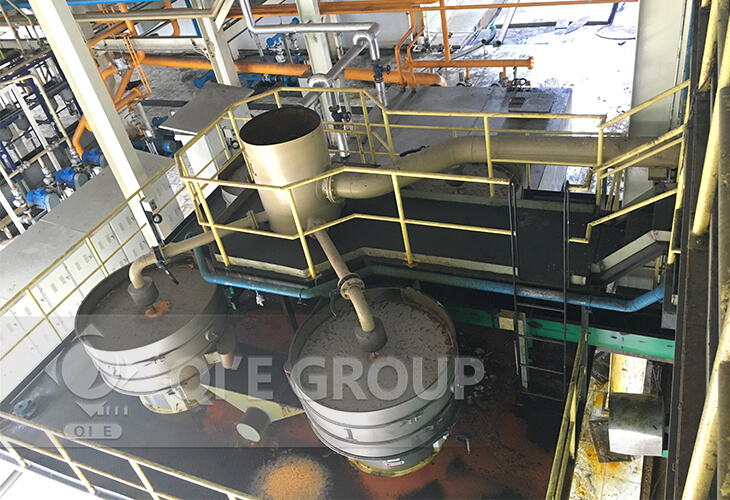
The extracted crude palm oil contains water, fibers, and non-oily impurities. Hence, clarification becomes necessary to separate pure oil from unwanted materials.
During clarification, processors add hot water to dilute the thick oil mixture. Then the mixture is heated and allowed to settle. Since oil is lighter than water, it rises to the top while heavier impurities settle below. Modern mills also use centrifuges and separators to improve purification efficiency.
As a result, clarified crude palm oil achieves better appearance, stability, and storage performance.
Although crude palm oil is usable, further refining improves its quality significantly. Refining removes moisture, free fatty acids, pigments, and odors. Consequently, the oil becomes cleaner, lighter in color, and more suitable for food applications.
After refining, the oil undergoes fractionation, a process that separates palm oil into two fractions namely Palm Olein and Palm Stearin. The liquid fraction is known as palm olein, while the solid fraction is called palm stearin.
Because palm olein remains liquid at room temperature, it is widely used as a cooking and frying oil in tropical countries. Moreover, palm olein offers good oxidative stability and longer shelf life compared to many other vegetable oils. Therefore, it competes strongly with sunflower, soybean, and groundnut oils in the global market.
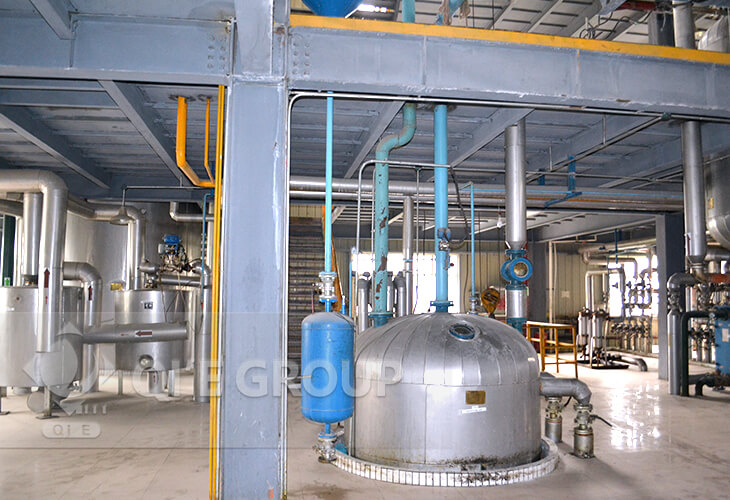
2TPH Complete Palm Oil Mill Plant
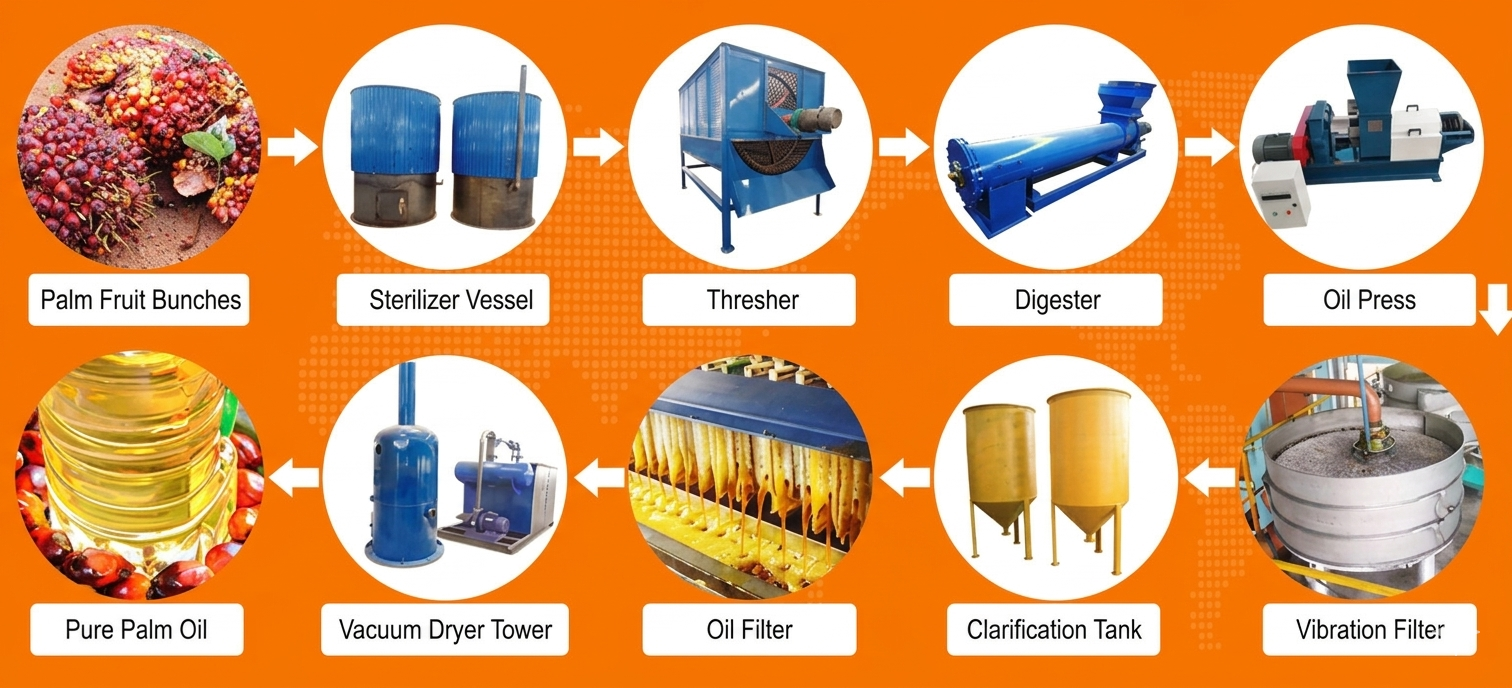
We specialize in the production of various palm oil extraction machine equipment, the main products are small 2TPH Complete Palm Oil Mill Plant. Palm fruit oil processing equipment has been sold to Indonesia, Thailand, Nigeria, Cameroon, Ghana, Cote d ‘Ivoire, Benin, Congo, Burkina Faso and so on.
1-5tph Palm Oil Processing Plant
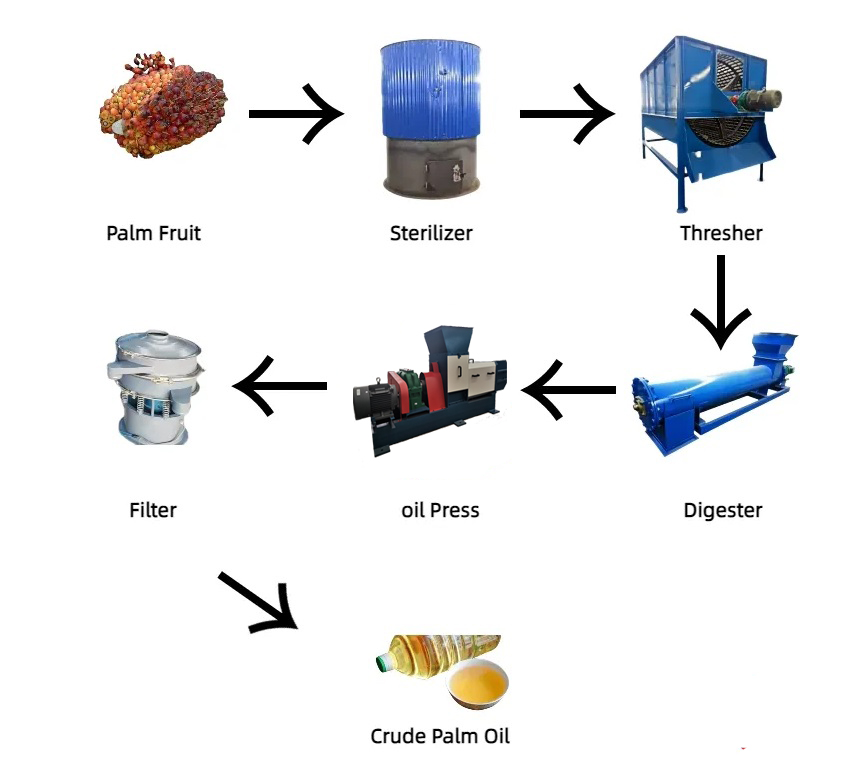
A 1–5 tons per hour (tph) palm oil processing plant is a specialized, small-scale industrial facility designed to bridge the gap between manual extraction and massive industrial mills. These plants utilize advanced, mature extraction technology to automate the conversion of Fresh Fruit Bunches (FFB) into high-quality crude palm oil (CPO) with high efficiency and low investment costs. Ideal for small plantations, local cooperatives, or rural enterprises, these integrated systems typically include specialized stations for sterilization, threshing, digestion, pressing, and clarification.
100TPD Complete Palm Oil Production Line
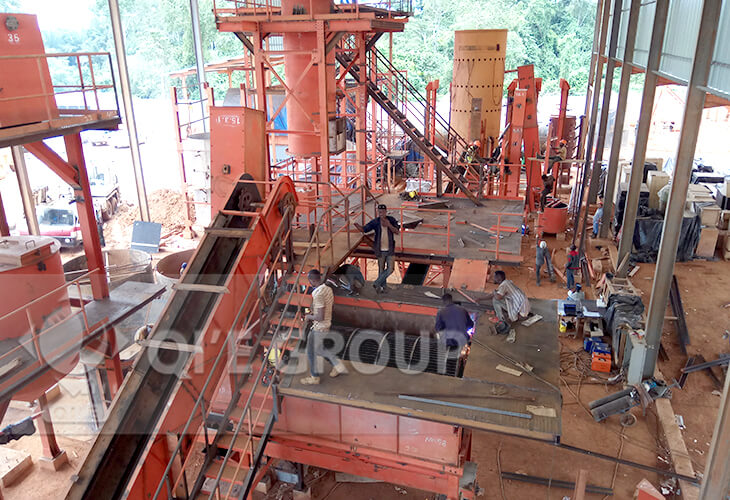
100TPD complete palm oil production line is a fully integrated system designed to convert fresh fruit bunches (FFB) into high-quality crude palm oil (CPO) and by-products. It covers the entire production chain from FFB reception to CPO storage, with a processing capacity of 100 tons of FFB per day, yielding approximately 20–25 tons of CPO (depending on FFB oil content, typically 20–25%). This palm oil production line is suitable for medium-scale palm oil mills, balancing operational efficiency, land occupation, and investment costs. It adheres to international food safety standards and can be customized for tropical regions with abundant palm resources, such as Ghana, Nigeria, Indonesia, and Malaysia.
Turnkey 100TPD Palm Oil Refinery Plant
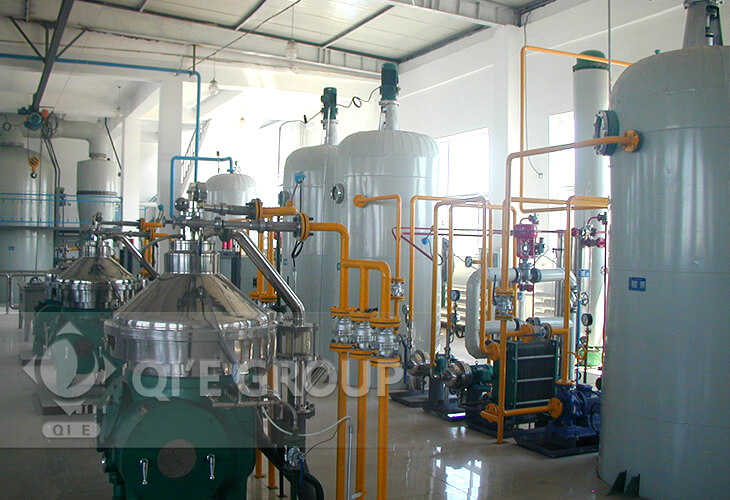
Turnkey 100 TPD (Tons Per Day) palm oil refinery plant is a large-scale industrial project that converts crude palm oil (CPO) into high-quality edible oil, typically through a continuous refining process. In a turnkey model, the provider handles everything from initial design and equipment manufacturing to onsite installation and commissioning.


Palm Oil Production Line
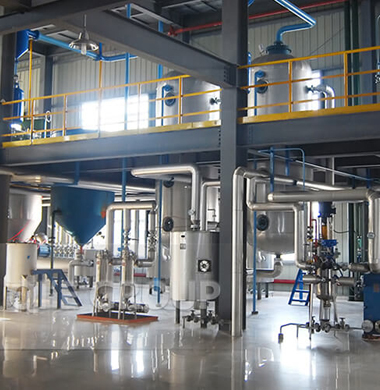
Palm Oil Refinery Plant
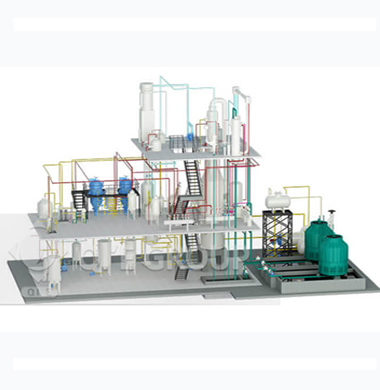
Palm Oil Fractionation Plant

Small Scale Palm Oil Processing Plant
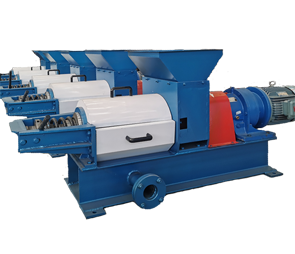
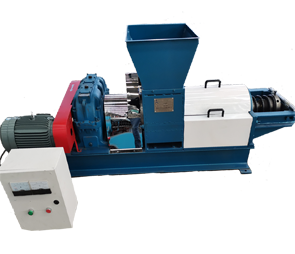
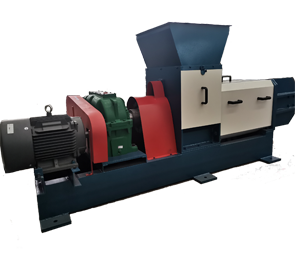
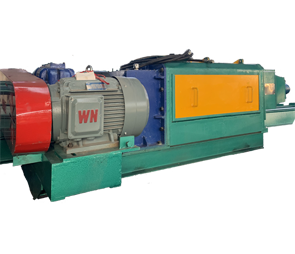
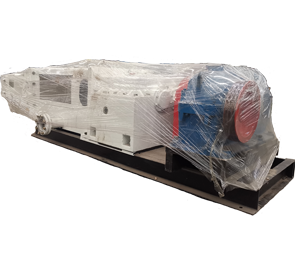
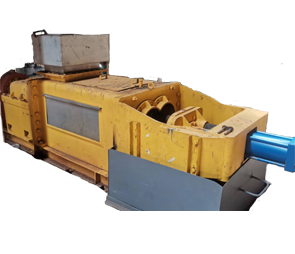
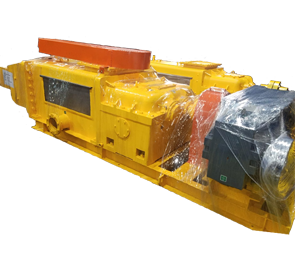
QIE Machinery offers a complete range of core equipment and related auxiliary equipment for palm oil solutions.
Whether you contact us by phone, email, or leave a message online, we will provide you with comprehensive and high-quality services.
Phone: 0086-13949113983
WhatsApp:
Email: qiea@oilpresses.org
Address: No.352 Lianhua Street, Hightech Industrial Development Zone, , Zhengzhou City,Henan Province, China