QIE Machinery
QIE Machinery
QIE Machinery
QIE Machinery

Palm oil is a kind of tropical woody vegetable oil, which is the largest variety of vegetable oil produced, consumed and internationally traded in the world at present. With soybean oil and rapeseed oil, it is also known as “the three major vegetable oils in the world”. It has a edible history of more than 5,000 years.
The fresh palm fruit string is 100% of the total palm fruit string, the proportion of empty fruit string is 23%, the palm fruit is 65%), and the palm oil content of the whole palm fruit string is (26%), and the palm kernel oil content is 3.25%.
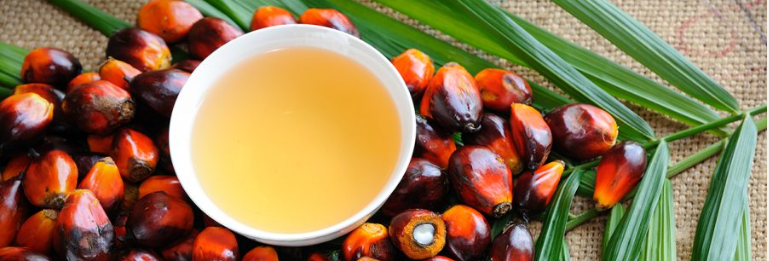
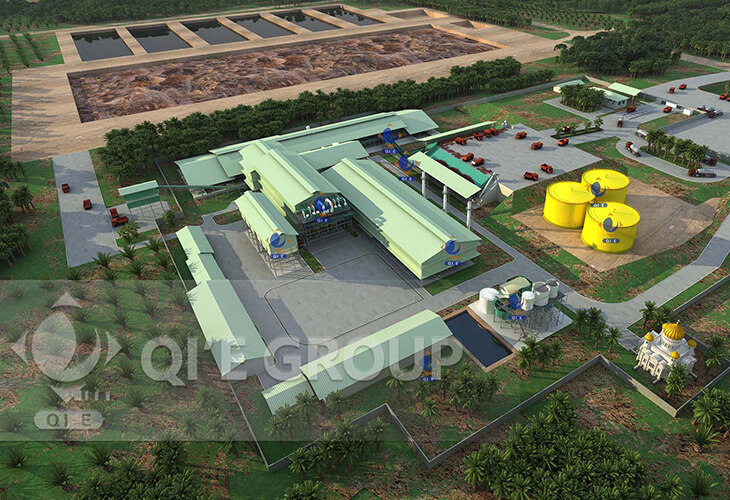
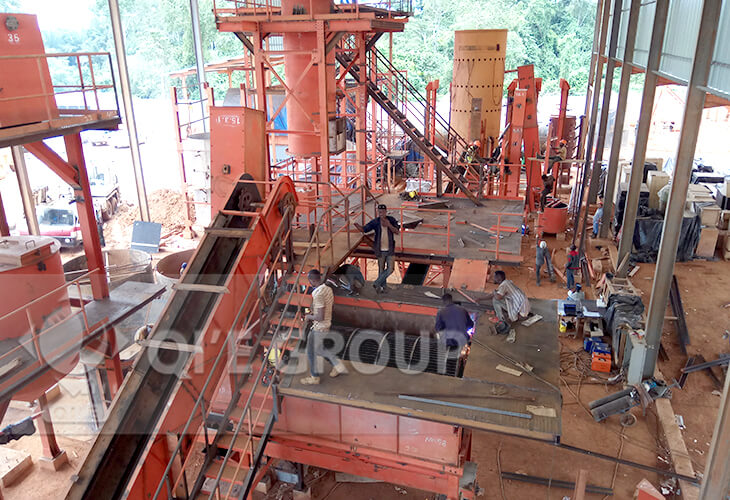
100TPD complete palm oil production line is a fully integrated system designed to convert fresh fruit bunches (FFB) into high-quality crude palm oil (CPO) and by-products. It covers the entire production chain from FFB reception to CPO storage, with a processing capacity of 100 tons of FFB per day, yielding approximately 20–25 tons of CPO (depending on FFB oil content, typically 20–25%). This palm oil production line is suitable for medium-scale palm oil mills, balancing operational efficiency, land occupation, and investment costs. It adheres to international food safety standards and can be customized for tropical regions with abundant palm resources, such as Ghana, Nigeria, Indonesia, and Malaysia.
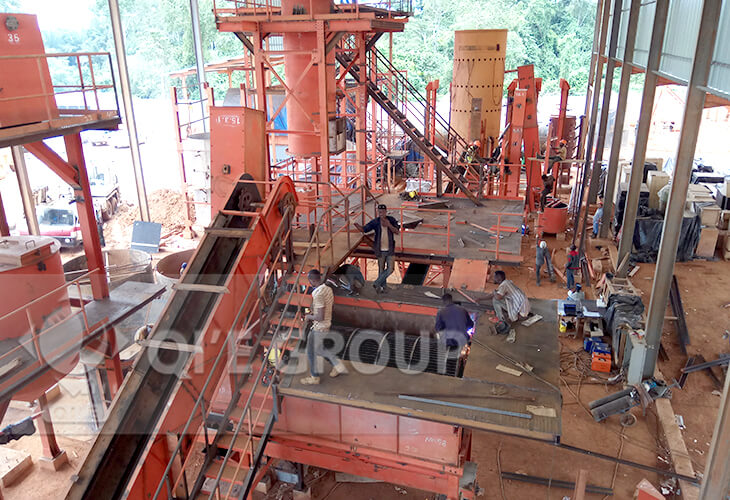
Industrial-scale palm oil production process, covering two core stages: Crude Palm Oil (CPO) Extraction and CPO Refining into Refined, Bleached, Deodorized (RBD) Palm Oil.(You may also interested in Palm Oil Mill Plant Production Line >>)
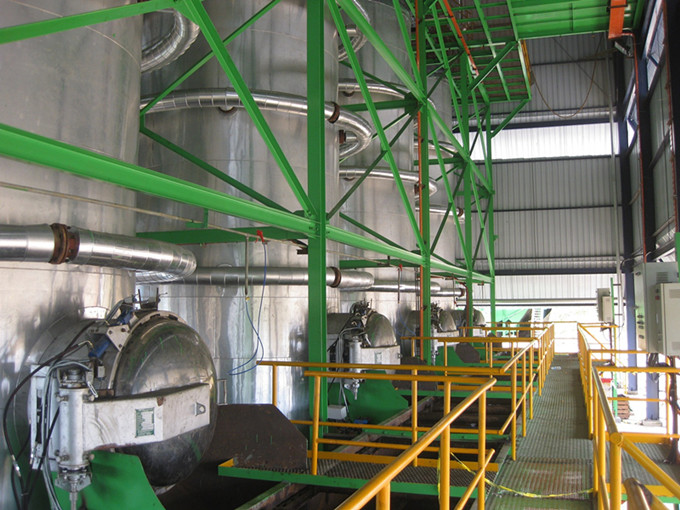
Place palm fruit string in horizontal killing enzyme tank or vertical sterillizer for 90-120 minutes. The purpose of sterillizer is to destroy lipase to avoid the increase of free fatty acid content in oil; high temperature sterillizer can make the fruit soft and facilitate mechanical granulation; pretreatment of pericarp to prepare for subsequent processing; preconditioning of fruit core to reduce kernel damage.
Sterillizer process: After palm fruit enters the sterillizer, closes the sterillizer to close the door quickly, opens the exhaust valve below the sterillizer, and then passes into the saturated steam of pressure 3bar (temperature about 145 ºC). After the cold air in the tank is basically discharged, close the exhaust valve and enter the cooking and sterillizer stage. The sterillizer time is generally 90 minutes. After sterillizer, close the intake valve, open the valve leading to the silencer, and drain the water and steam from the tank before opening the door of the sterillizer.
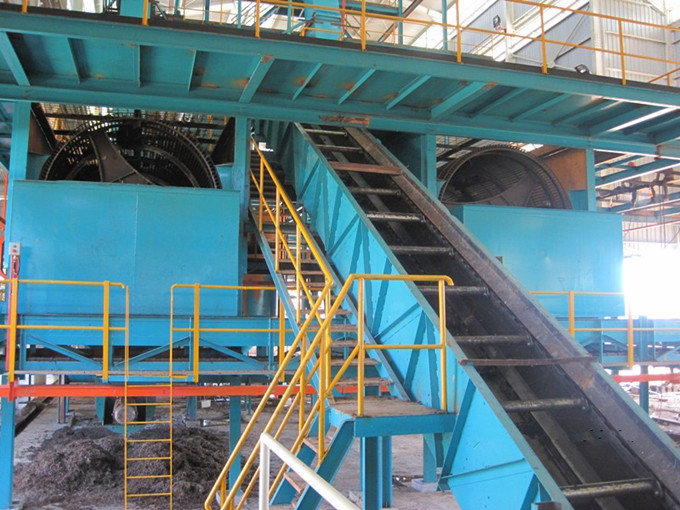
The purpose of threshing is to separate the oil palm fruit from the fruit string by strong vibration. The separated oil palm fruit is then fed to the cooking tank by the conveyor. The empty fruit string is discharged from the other end of the drum to the storage yard, or transported out of the plant for recycling of palm garden cover, or incineration on site as fertilizer to farmland.
The purpose of mashing and cooking is to tear the epidermis of the fruit, separate the pulp from the core and mash the pulp tissue, and heat it to soften the pulp and destroy the cellular structure of the pulp, which is beneficial to the precipitation of oil from the pulp tissue.
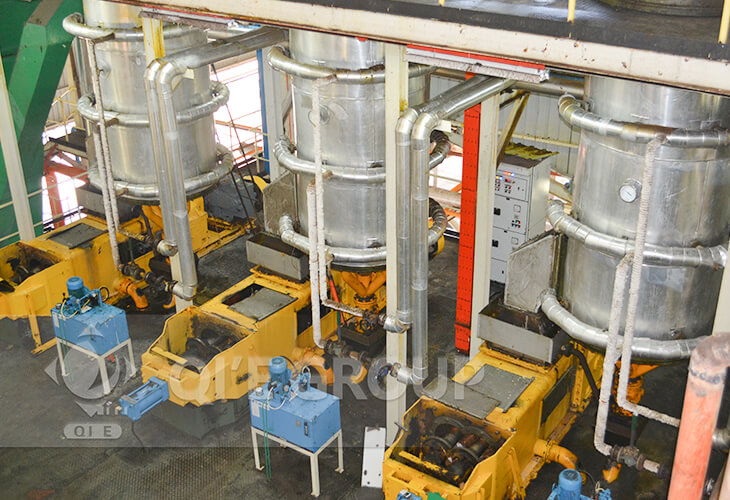
There is a feeder entrance on the upper part of the digester and an outlet port in the lower part. There is a central shaft with many axial batting rods in the digester, and there are many liner plates in the inner wall of the digester. The fruit particles mash the pulp under the action of stirring the baton and the collision of the liner. Crushing cooking equipment is a cylindrical tank with heating jacket. Indirect steam is inserted into the jacket for heating, and there is a direct steam nozzle in the tank to adjust moisture and temperature. After heating for 1 h, the temperature of the whole billet can reach about 90 ºC-95 ºC. The purpose of heating is to destroy the emulsification state of formed by oil and water in fruit tissue, to reduce the viscosity of oil, and to facilitate the flow and precipitation of oil.
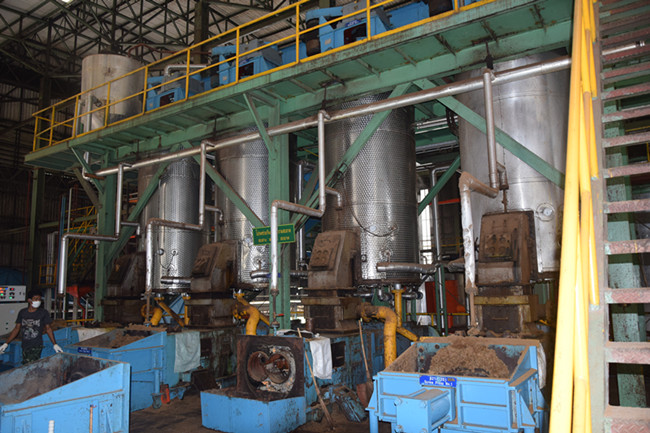
After the above steps, palm fruit is sent to spiral press, oil brown fruit is divided into: oil, water, solid impurity mixture and cake (fiber and core). The continuous screw press is adopted. It has a horizontal box with holes, an 8-character cross-shaped box, with two screws in it, and a cake head at the slag discharge port of the box body. It can control the pressure to ensure that the residual oil in the cake is minimized, and it can also adjust the crushing rate of the fruit core to a reasonable range. Under the action of spiral pressure, the fried cake precipitated from the pulp tissue was extruded from the machine head, which contained the kernel (unruptured brown kernel oil), and the liquid part flowed out from the lower mouth. After filtration, it was sent to the butterfly centrifuge to obtain hairy palm oil. After pressing, the oil palm fruit is divided into two parts: the mixture of oil, water and solid impurities; the oil yield of fiber and kernel is 20% of crude palm oil and 2% of hairy palm kernel oil according to the fresh fruit of palm. The parameters of crude palm oil: orange color, semi-liquid oil, surface density (50 ºC): 0.8896 ≤ 0.8910, saponification value: (mgkoh/g oil) 190 × 202, iodine value (gz2/100g).
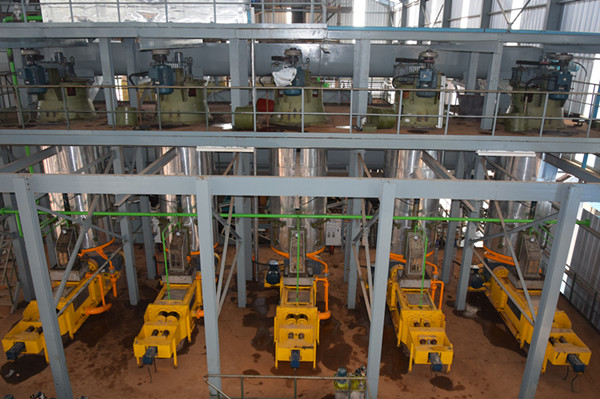
This step is to get purer palm oil. The crude oil generally contains 66% oil, 24% water and 10% non-oil solid. The oil is washed by precipitation filtration and the fiber is separated from the oil. Then continuous precipitation clarification can be carried out to obtain oil and sediment. After centrifuge separation, the oil enters the vacuum to dry. Keep after drying. The precipitates are clarified twice, the oil precipitates are filtered, the contaminated oil is separated, the oil is settled twice, the dirty oil mixture is clarified and separated, and the skimmed oil is secondary settled. the sewage pump is treated with the sewage treatment tank.
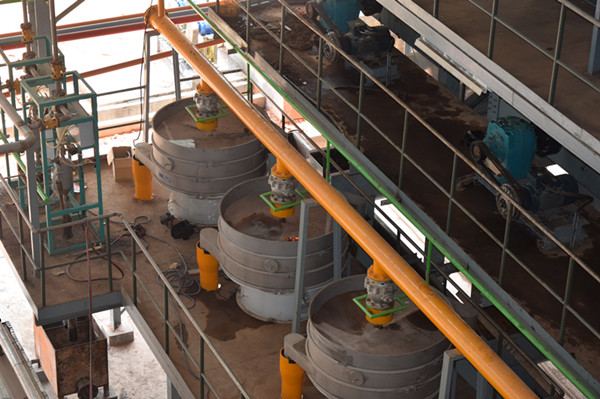
Refining Crude Palm Oil (CPO) into Refined, Bleached, and Deodorized (RBD) Palm Oil primarily uses physical refining rather than chemical refining because CPO has a high Free Fatty Acid (FFA) content and relatively low phospholipid (gum) levels. This process transforms the dark, odorous crude oil into a bland, light-yellow product suitable for cooking and food manufacturing.(Read More: Palm Oil Refinery Plant >>)
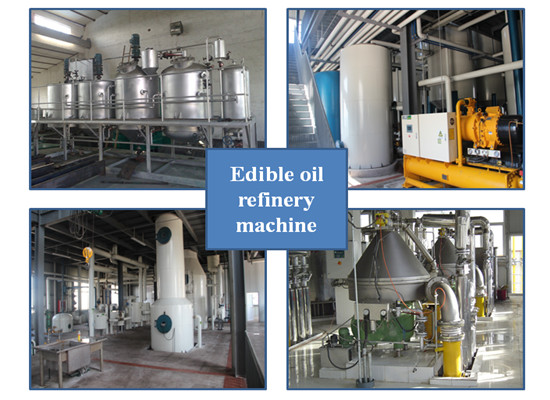
Degumming: Crude oil is heated to approximately 60–90°C and mixed with phosphoric acid (0.03%–0.06% wt). This converts non-hydratable phospholipids into a soluble form for later removal, effectively “cleaning” the oil of gums without the need for large amounts of water.
Bleaching (Decolorization): The degummed oil is heated further (typically 80–110°C) under vacuum and mixed with bleaching earth (activated clay). This adsorbent captures color pigments like carotenoids and remaining traces of metals or gums. The mixture is then passed through a leaf filter to separate the spent clay.
Deacidification & Deodorization: This critical final step occurs in a deodorizing tower at high temperatures (240–260°C) under a high vacuum.
Technical Specifications
Power Requirements: Typically 350–500 kW, often supported by a biomass boiler that burns fiber and shells to generate steam and electricity.
Land Requirement: Approximately 3,000–5,000 square meters for the workshop, storage tanks, and effluent treatment.
By-products: A 100 TPD line will generate significant amounts of PFAD, PKO (Palm Kernel Oil), and EFB, which can be sold or repurposed for fuel/fertilizer.
The line uses food-grade, corrosion-resistant equipment (304 stainless steel for contact parts) to ensure durability and product safety. Below is the standard equipment package:
| Equipment Category | Model/Specification | Quantity | Core Function |
|---|---|---|---|
| FFB Handling System | Vibrating screen + magnetic separator + conveyor belt | 1 set | Remove impurities, transport FFB to next stage |
| Sterilization System | Horizontal cylindrical sterilizer (100TPD capacity) | 2 units | Batch sterilization for continuous production |
| Threshing System | Drum-type thresher (separation rate ≥98%) | 1 unit | Separate palm fruits from EFB |
| Digestion & Pressing System | Steam-heated digester + double-stage screw press | 1 set | Break oil cells, extract crude oil |
| Oil Clarification System | Sedimentation tank + plate-and-frame filter press | 1 set | Purify crude oil (optional: add decanter centrifuge for high automation) |
| CPO Drying & Storage | Vacuum dryer (30TPD capacity) + 2×50m³ insulated tanks | 1 set + 2 units | Dry CPO, store at 55°C to prevent solidification |
| By-Product Processing | Kernel separator + fiber dryer | 1 set | Extract palm kernels from press cake; dry PPF for fuel |
| Auxiliary Systems | Biomass-fired boiler (2 ton/h steam output) + PLC control panel | 1 unit + 1 set | Supply steam/electricity; monitor and regulate the entire line |
What is the core capacity and output of a 100TPD palm oil production line?
The line is configured to process 100 tons of Fresh Fruit Bunches (FFB) daily. Key outputs depend on FFB quality (oil content 20–25%):
Primary output: 20–25 tons of Crude Palm Oil (CPO) per day (yield rate 20–25%).
By-products: Palm kernels (4–5 tons/day), Empty Fruit Bunches (EFB, ~60 tons/day), Palm Press Fibre (PPF, ~10 tons/day), and Palm Kernel Cake (PKC, ~3 tons/day after kernel processing).
Can the 100TPD line be expanded in the future?
Yes. The line uses a modular design for easy capacity upgrades without full system replacement:
Adding 1 extra sterilizer and 1 double-stage screw press can increase capacity to 150–200 TPD.
The line is compatible with a subsequent CPO refining line to produce Refined, Bleached, Deodorized (RBD) palm oil, which has a 30–40% higher market value than CPO.
What quality standards does the CPO from the 100TPD line meet?
The final CPO meets international commercial standards, with key quality parameters:
Free Fatty Acid (FFA) content ≤ 3.2%
Moisture content ≤ 0.2%
Solid impurity content ≤ 0.3%
No microbial contamination (sterilization and temperature control prevent spoilage)
Why choose Physical Refining over Chemical Refining at this scale?
For palm oil, physical refining is the industry standard.
Lower Loss: It avoids the “soap-stock” loss found in chemical refining.
Efficiency: It removes high FFA (Free Fatty Acids) via a deodorizing tower rather than caustic soda, which is more cost-effective for the high-acid profile of crude palm oil.
Is the 100TPD line suitable for small-scale farmers or large plantations?
The 100TPD line is ideal for medium-scale investors, including:
Smallholder farmer cooperatives pooling FFB resources for centralized processing.
Medium-sized plantations (500–1,000 hectares) to process on-site FFB and avoid transportation costs.
Independent mill operators targeting regional CPO markets with balanced investment and return.
What are the valuable by-products?
A 100 TPD plant generates significant secondary revenue streams:
PFAD (Palm Fatty Acid Distillate): Recovered during refining; sold to the soap and animal feed industries.
Palm Kernels: Can be sold to kernel crushing plants or processed on-site for high-value PKO.
Shells & Fiber: Used as free fuel for the mill’s boiler.


Palm Oil Production Line
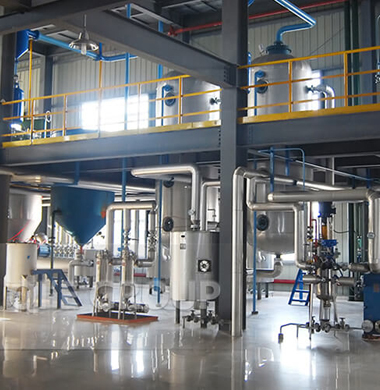
Palm Oil Refinery Plant
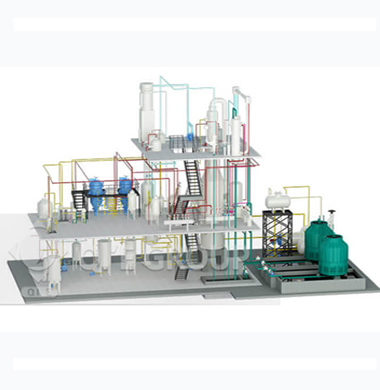
Palm Oil Fractionation Plant

Small Scale Palm Oil Processing Plant
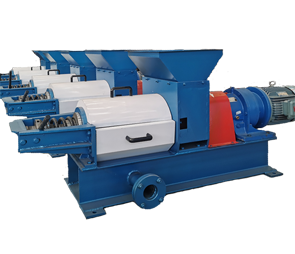
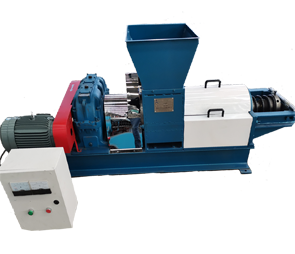
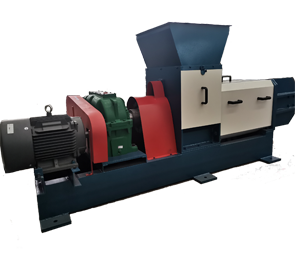
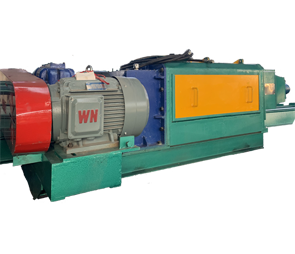
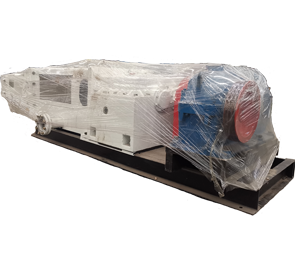
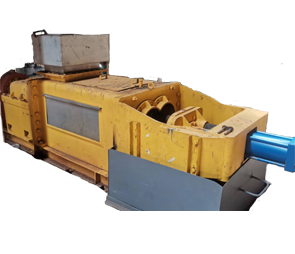
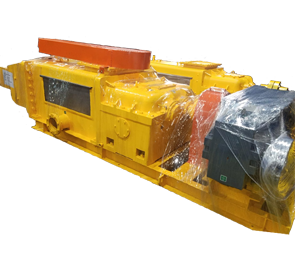
QIE Machinery offers a complete range of core equipment and related auxiliary equipment for palm oil solutions.
Whether you contact us by phone, email, or leave a message online, we will provide you with comprehensive and high-quality services.
Phone: 0086-13949113983
WhatsApp:
Email: qiea@oilpresses.org
Address: No.352 Lianhua Street, Hightech Industrial Development Zone, , Zhengzhou City,Henan Province, China