QIE Machinery
QIE Machinery
QIE Machinery
QIE Machinery

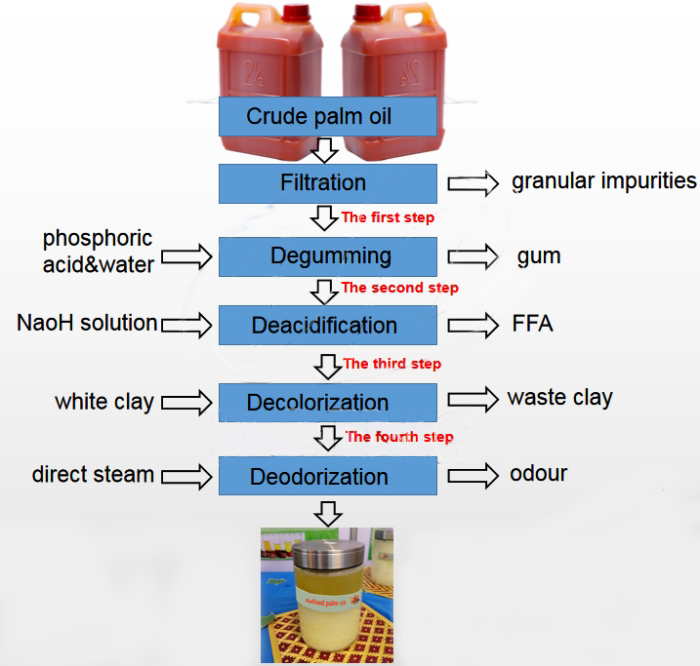
Palm Oil Refining is the industrial process of transforming Crude Palm Oil (CPO) into clean, safe, and stable edible oil. Crude palm oil naturally contains impurities like free fatty acids, gums, moisture, and dark pigments. The refining process removes these unwanted components. This improves the oil’s flavor, color, smell, and shelf life, making it suitable for cooking and food manufacturing.
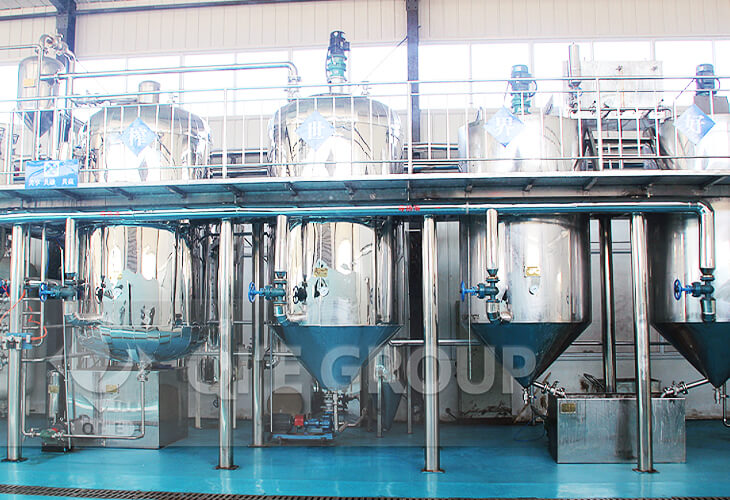
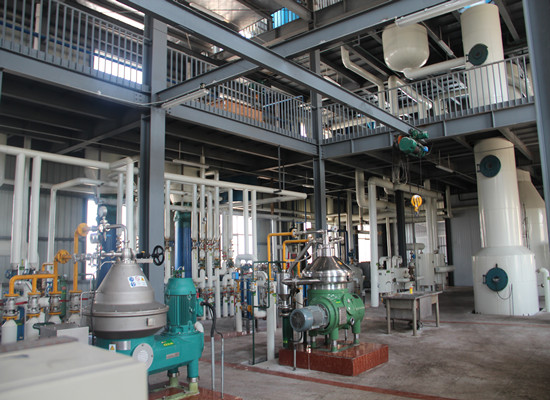
The 20 TPD Palm Oil Refining Line Plant is designed for small-to-medium enterprises seeking to transform Crude Palm Oil (CPO) into high-quality, market-ready Refined, Bleached, and Deodorized (RBD) edible oil. Bridging the gap between small batch processing and massive continuous industrial refineries, this capacity plant offers an optimal balance of manageable capital investment, a compact factory footprint, and flexible operational control. Utilizing cost-effective physical or chemical refining methods, the automated line systematically removes free fatty acids, gums, odors, and dark carotene pigments through integrated degumming, bleaching, and deodorizing stages. With the optional addition of a fractionation unit, operators can further separate the refined oil into premium liquid palm olein for cooking and solid palm stearin for industrial use, maximizing profit margins and ensuring a rapid return on investment.
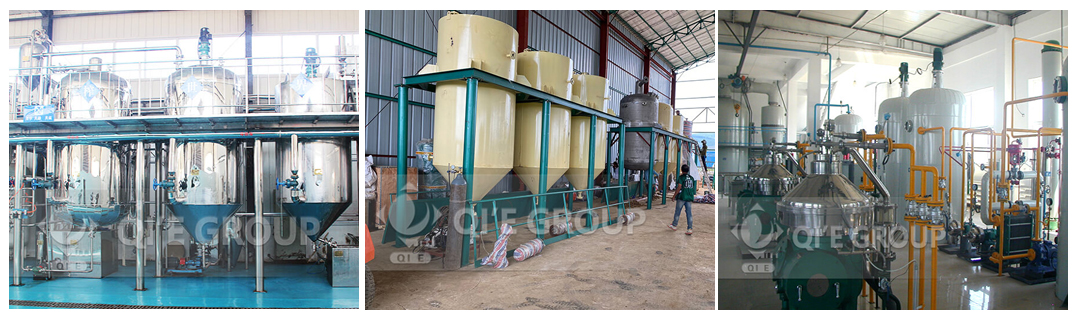
1.Degumming Section: Some impurity, such as Phospholipid, gum, and protein, can be dissolved into oil when there is no water, but once there is water in oil, these impurity can be dissolved into water. So, in degumming section, we use the hot water to wash crude oil for two-three times to remove these impurity.
2.Neutralizing Section: Crude oil contains much free fatty acid, which is harmful for health. Free fatty acid can have the reaction with caustic soda, during the reaction, it can be saponified and becomes soapstock, then small soapstock pellets will sink and becomes sediment and be pumped out. After neutralizing, most of the free fatty acid will be removed out.
3.Decoloriztion Section: Most of the crude oil has deep color because of the pigments, such as carotene, xanthophyll, etc. We use bleaching earth to remove pigments, because bleaching earth has strong adsorption capacity. Then pump oil into plate filter to remove bleaching earth, then pigment also will be removed out along with bleaching earth, then oil will be clean and transparent.
4.Deodorization Section: Pure oil has no smell, but different crude oil has their special smell because of some volatile matters, for example the oxide for ketones, aldehydes, hydrocarbons. In deodorizing section, we deliver steam into oil continuously, and make sure steam and oil can fully contacted under high temperature and pressure, then volatile matters can be removed out along with the steam.
| Primary Machinery Included | Purpose | |
|---|---|---|
| Refining Section | Refining Pots, Acid/Alkali Mixers, Dosing Pumps | Removes gums and treats FFA |
| Bleaching Section | Decoloring Tank, Bleaching Earth Tank, Leaf Filter | Removes pigments and dark colors |
| Deodorizing Section | Stainless Steel Deodorizing Tower, Vacuum Jet Pumps | Eliminates bad odor and volatile acids |
| Fractionation Unit | Crystallizer Tanks, Water-Chilled Screw Chillers, Membrane Filter Press | Splits oil into olein (liquid) and stearin (solid) |
| Utilities & Energy | 2 T/H Steam Boiler, Heat Conduction Oil Furnace | Supplies essential thermal heat and steam vacuum |
Refinery plants choose between two distinct processing methods, depending on the crude oil quality and budget:
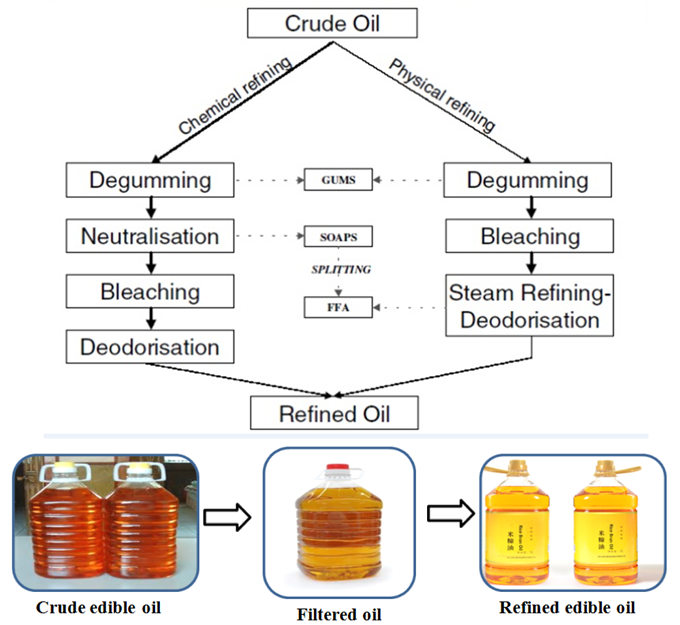
1. Physical Refining (Most Common)
This is the preferred method for palm oil because it uses fewer chemicals, reduces oil loss, and produces high-yield results.
Best For: High-quality Crude Palm Oil with high acidity.
How it works: Uses high-temperature steam under a deep vacuum to physically strip away free fatty acids.
This traditional method uses chemical reactions to neutralize impurities.
Best For: Oils with high gum content or lower-grade crude oils.
How it works: Uses an alkaline chemical (like caustic soda) to react with fatty acids, turning them into a soap stock that is physically separated from the oil.
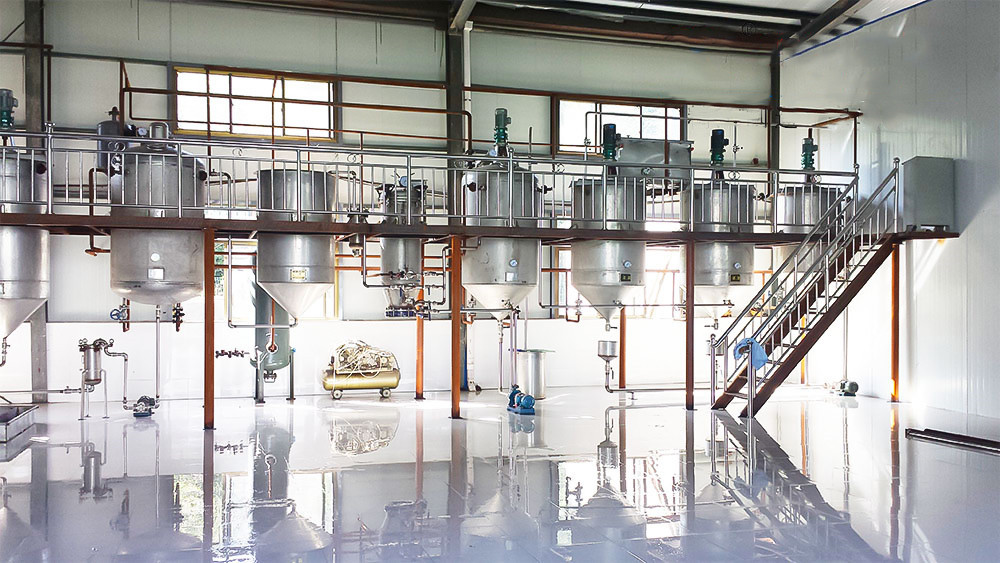
*We offer quality oil mill and oil refinery products of highest order that are well appreciated by our clients.
*Robust Oil Mill and Oil Refinery Machines designed for minimum Wear and Tear.
*Totally Steel Fabricated machinery.
*Low Maintenance oil mill machines with high oil productivity.
*Low Space occupancy of our machines.
*Continuous Research & Development in order to provide best performance.
*We possess a team of experts who source products of international standard to keep abreast
*With the global markets.
*Our endeavor to provide the best has been acknowledged by our clients both in domestic and international arena.
*We are manufacturer. We know industry. We know technology. We know how to enhance your success.
Which is better for a 20 TPD capacity: Physical or Chemical refining?
Physical refining is generally the superior choice for palm oil processing.
Why it wins: Crude Palm Oil (CPO) naturally has high Free Fatty Acid (FFA) levels (3% to 5%) but very low gum content. Physical refining uses steam under high vacuum to strip away these acids without chemicals.
The benefits: This method limits neutral oil loss, eliminates the need for expensive caustic soda, and removes the burden of treating chemical wastewater.
What is the estimated total cost to build a 20 TPD palm oil refining plant?
The complete capital expenditure (CapEx) varies based on equipment origins and regional labor costs, but generally breaks down into:
Core Equipment Sourcing: $180,000 to $350,000 USD for standard Chinese or Indian manufacturing lines. High-end European machinery will exceed this range.Fractionation Plant Add-on: $50,000 to $90,000 USD extra to separate oil into liquid and solid forms.
Auxiliary Utilities: $30,000 to $60,000 USD for the steam boiler, thermal oil furnace, and water cooling systems.Civil Works & Installation: $40,000 to $100,000 USD for factory foundations, piping, electrical wiring, and freight.
Total Estimated Budget: $300,000 to $600,000 USD for a complete, operational facility.
What is the expected Return on Investment (ROI) and payback period?
Payback Window: Most well-managed 20 TPD palm oil refineries achieve full payback within 12 to 24 months of continuous operation.
Profit Drivers: Profitability depends heavily on the price spread between local Crude Palm Oil (raw material) and Refined Bleached Deodorized (RBD) Olein (finished product).
Margin Boosters: Profitability increases if you refine your own plantation crops, process local smallholder crops for a fee, or process valuable byproducts.
What commercial byproducts are generated, and how can they be monetized?
Nothing goes to waste in a physical palm oil refinery:
Palm Fatty Acid Distillate (PFAD): Leftover from the deodorizer (3% to 5% of total input volume). It is sold at high value to chemical plants for making soaps, cosmetics, and biodiesel.
Spent Bleaching Earth: The used clay filtered out after the bleaching stage. It can be sold to local cement factories as a fuel additive or recycled into eco-bricks.
Soap Stock (If using Chemical Refining): Sold directly to industrial laundry soap manufacturers.
Can this same 20 TPD palm oil refining plant refine other vegetable oils?
Yes, with minor operational adjustments. The tanks, filters, heaters, and vacuum pumps used for palm oil are highly versatile.
The catch: Oils like sunflower, soybean, or peanut oil have higher gum contents than palm oil.
The solution: To process these oils, you must add a chemical dosing pump to run a chemical degumming step before bleaching. You will also need a dewaxing crystallization unit if you process sunflower or rice bran oils.
What quality parameters does the finished RBD palm oil achieve?
The output oil meets international edible oil standards (such as CODEX or PORAM specifications):
Free Fatty Acids (FFA): Reduced from 5% down to less than 0.1%.
Moisture & Impurities: Less than 0.05%.Color (Lovibond cell 5¼”): Lightened from deep dark red down to under 3R / 30Y (a clear, bright golden-yellow color).
Peroxide Value: Reduced to under 1 meq/kg, which ensures excellent oxidation stability and a long shelf life.


Palm Oil Production Line
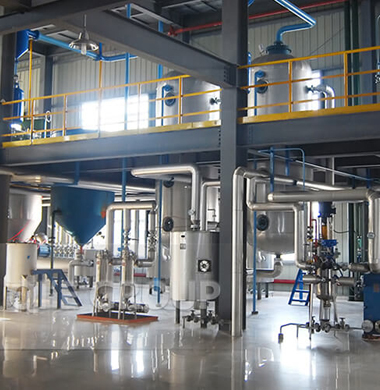
Palm Oil Refinery Plant
Palm Oil Fractionation Plant

Small Scale Palm Oil Processing Plant
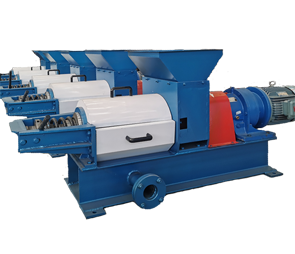
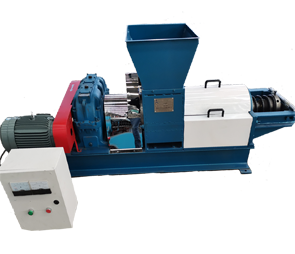
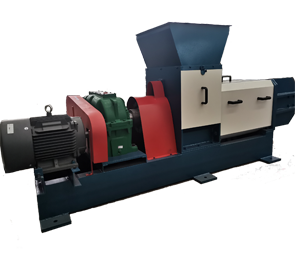
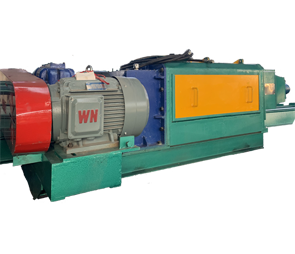
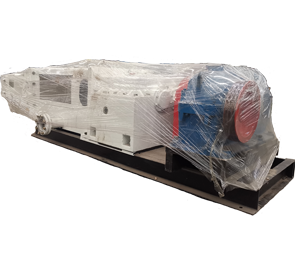
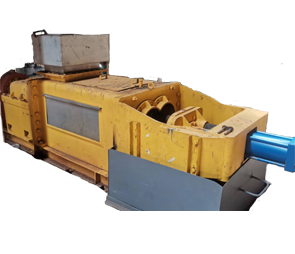
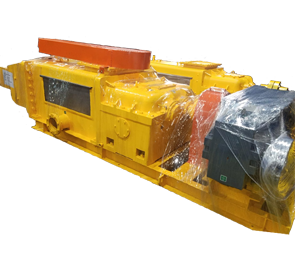
QIE Machinery offers a complete range of core equipment and related auxiliary equipment for palm oil solutions.
Whether you contact us by phone, email, or leave a message online, we will provide you with comprehensive and high-quality services.
Phone: 0086-13949113983
WhatsApp:
Email: qiea@oilpresses.org
Address: No.352 Lianhua Street, Hightech Industrial Development Zone, , Zhengzhou City,Henan Province, China