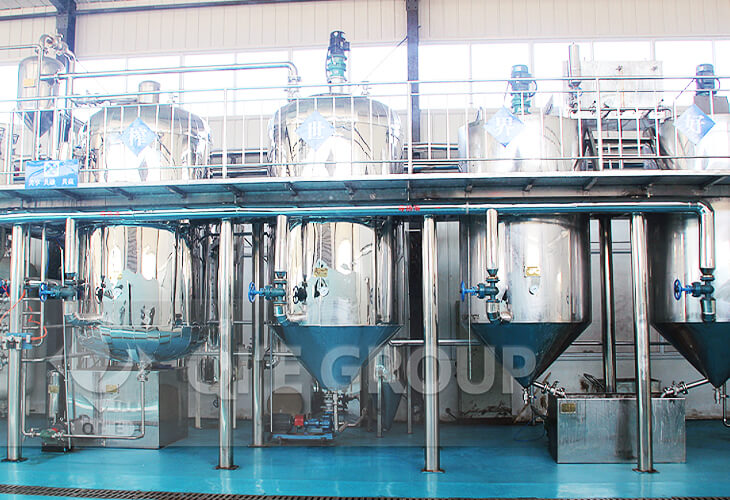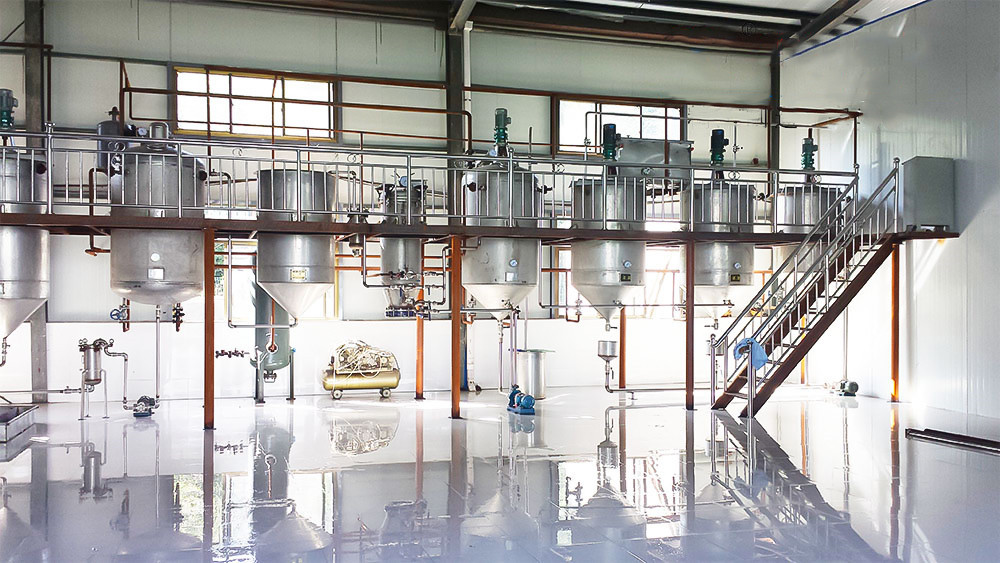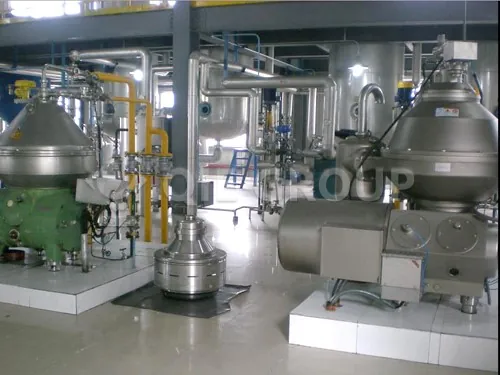
QIE Machinery
QIE Machinery
QIE Machinery
QIE Machinery

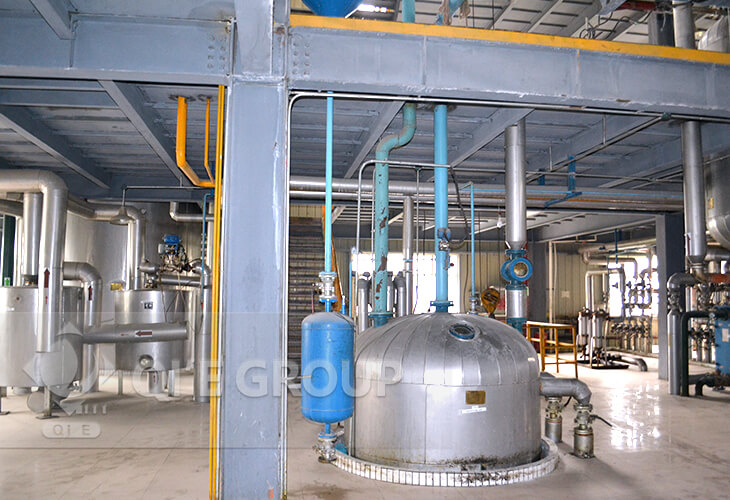
A complete palm oil refining line is the industrial process that transforms Crude Palm Oil (CPO)—a dark, odorous, and chemically unstable raw material—into Refined, Bleached, and Deodorized (RBD) Palm Oil, a golden-yellow, neutral-tasting, and stable edible oil ready for the food industry.
The primary goal of this process is to systematically remove unwanted impurities from CPO, including:
Free Fatty Acids (FFAs): Responsible for oil rancidity and acidity.
Gums (Phospholipids): Which cause darkening during heating.
Carotenoid Pigments: The natural compounds that give CPO its deep red-orange color.
Odor Compounds: Ketones, aldehydes, and other volatile substances that impart an undesirable smell.
A standard refining line typically reduces the FFA content of CPO from around 5% to less than 0.1%, producing a bright oil that meets international edible oil standards.
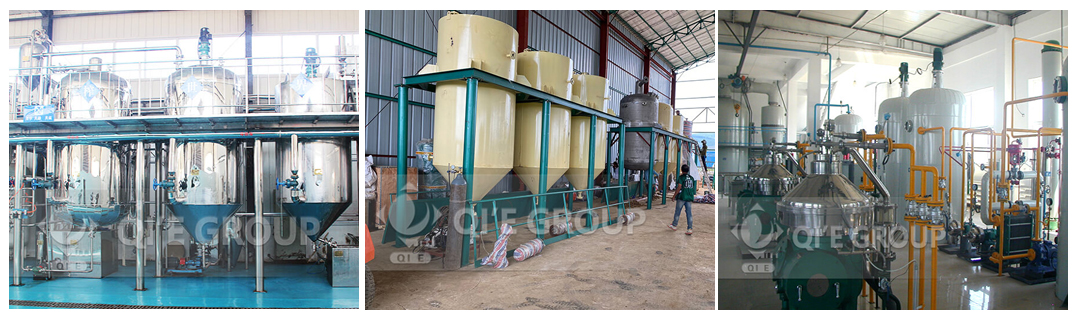
For palm oil, physical refining is the most common and economically efficient method. Because CPO has a high FFA content and relatively low gum levels, physical refining uses high-temperature steam distillation under vacuum to remove FFAs without the need for chemicals like caustic soda. This method is also more environmentally friendly and offers a higher oil yield than chemical refining.
The physical refining line follows four main stages:
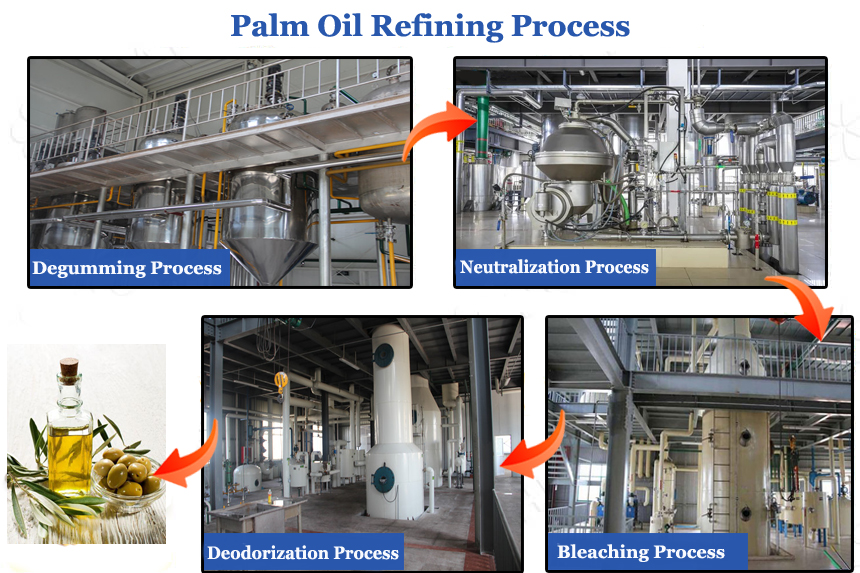
Purpose: To remove gums (phospholipids) that would otherwise darken the oil when heated and degrade its quality.
Process:
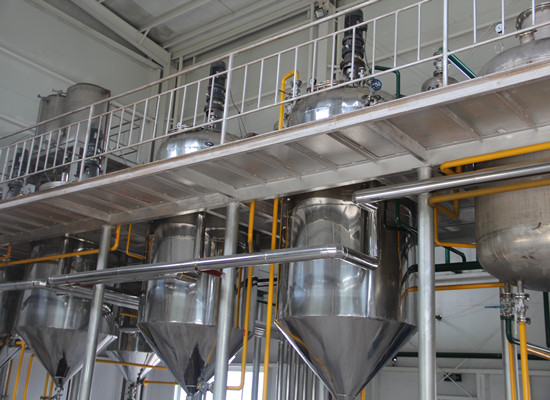
Purpose: To remove color pigments (primarily carotenoids) and residual trace metals, gums, and soap.
Process:
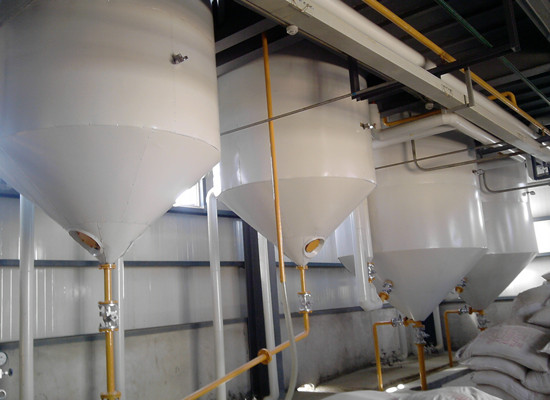
Purpose: This is the critical final stage. It strips away the remaining Free Fatty Acids (deacidification) and removes all volatile odor-causing compounds (deodorization) using high-temperature steam distillation.
Process:
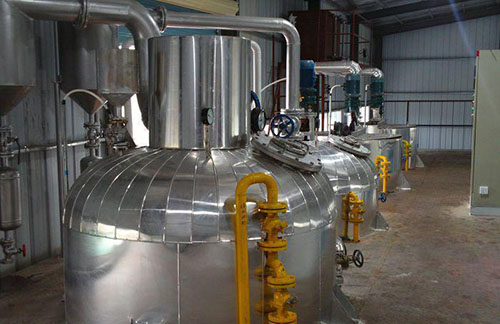
A complete refining line often includes an additional fractionation section. This is a purely physical process that separates the RBD Palm Oil into two distinct fractions based on their melting points, meeting different market demands:
Fractionation Process: The cooled RBD Palm Oil is slowly cooled in crystallizer tanks with controlled agitation, allowing the higher-melting stearin to form crystals. The slurry is then passed through a membrane filter press, which separates the solid stearin from the liquid olein.
| Parameter | Typical Value for RBD Oil |
|---|---|
| Free Fatty Acids (FFA) | < 0.1% |
| Moisture & Impurities | < 0.05% |
| Peroxide Value | < 1 meq/kg |
| Color (Lovibond Cell) | < 3 Red / 30 Yellow (bright golden-yellow) |
| Data source |
The industry standard divides them into three main categories: Batch, Semi-Continuous, and Full-Continuous systems.
| Type | Typical Capacity | Key Features & Application Scenarios |
|---|---|---|
| Batch Refining Line | 1 – 30 tons/day | Operation: Processes oil in discrete batches. Advantages: Lower initial investment, simple equipment, flexible operation (easy to switch between different oils). Best For: Small-scale mills, start-up operations, or facilities that process multiple types of crude oils. |
| Semi-Continuous Refining Line | 20 – 50 tons/day | Operation: Some stages (e.g., bleaching and deodorization) are continuous, while others may be batch-based. Advantages: Balances cost and efficiency; moderate automation. Best For: Medium-scale production where full automation is not yet economical. |
| Full-Continuous Refining Line | 30 – 600+ tons/day | Operation: All stages (degumming, bleaching, deodorization) run 24/7 in a fully automated, uninterrupted flow. Advantages: Highest efficiency, lower utility consumption (steam/electricity) per ton, stable product quality, minimal oil loss. Best For: Large-scale industrial refineries with high daily output requirements. |
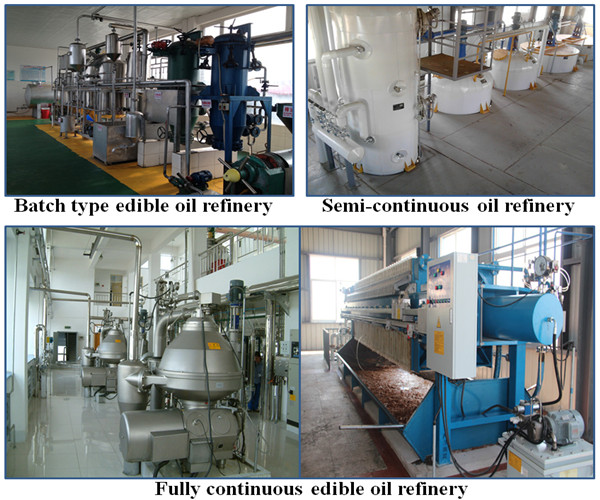
This “Batch/Semi/Full-Continuous” classification applies primarily to the Physical Refining process—the most common method for palm oil, which uses steam distillation to remove Free Fatty Acids (FFAs).
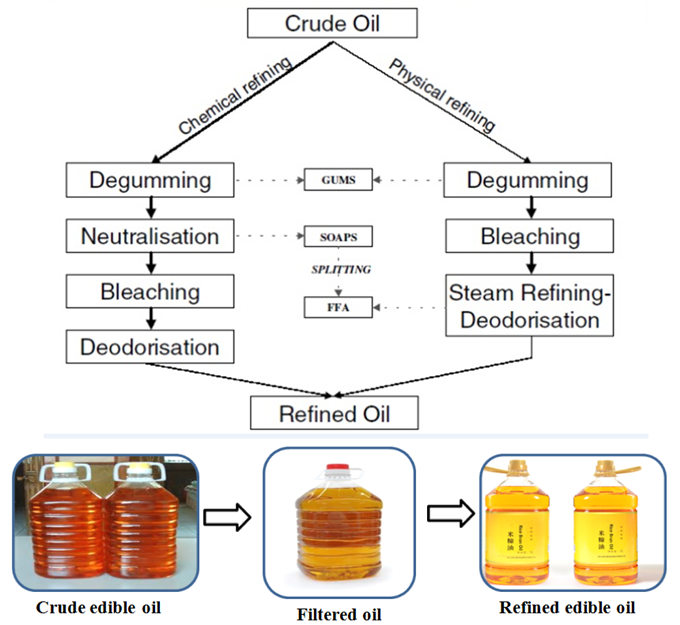
However, the refining line type can also be categorized by the refining method itself:
| Refining Method | Description | Application |
|---|---|---|
| Physical Refining | Uses high-temperature steam stripping under vacuum to remove FFAs. No caustic soda (alkali) is used. | The standard choice for palm oil (high FFA, low gum content). Produces PFAD as a byproduct. |
| Chemical Refining | Uses caustic soda (NaOH) to neutralize FFAs into soapstock, which is then separated by centrifuge. | Typically used for oils with low FFA and high gum content (e.g., soybean oil). Less common for palm oil. |
Optional Final Stage: Fractionation (Physical Separation)
A complete palm oil refining line often includes a Fractionation section, which is not a refining type but an add-on process. It physically separates RBD Palm Oil into:
Q: What is the difference between CPO and RBD Palm Oil?
A: CPO (Crude Palm Oil) is the dark red-orange oil extracted directly from the palm fruit pulp. It contains high levels of Free Fatty Acids (FFAs), gums, pigments, and has a distinct odor. RBD Palm Oil is the refined, bleached, and deodorized product. It is a stable, bright golden-yellow oil with a neutral taste, ready for use in food manufacturing and cooking.
Q: Why is physical refining the most common method for palm oil?
A: Palm oil naturally has a high FFA content and relatively low gum levels. Physical refining uses high-temperature steam stripping under vacuum to remove FFAs. This method is more economical, offers higher oil yields, and generates less chemical waste compared to chemical (alkali) refining, making it the industry standard for large-scale operations.
Q: What is PFAD and why is it important?
A: PFAD stands for Palm Fatty Acid Distillate. It is the byproduct collected during the deodorization stage when FFAs and odor compounds are stripped from the oil via steam distillation. PFAD is a valuable raw material used in the production of biodiesel, soaps, and animal feed.
Q: What is the purpose of fractionation after refining?
A: Fractionation is an optional physical separation process that divides RBD Palm Oil into two main fractions based on their melting points: RBD Palm Olein (liquid at room temperature, used as cooking oil) and RBD Palm Stearin (solid at room temperature, used for margarine, shortening, and industrial applications). This step maximizes the product’s value for different market needs.
Q: What is the typical production capacity range for a complete palm oil refining line?
A: A complete line can be designed to handle anywhere from 1 to 600+ tons per day. The capacity depends on the chosen system—batch (1–30 TPD), semi-continuous (20–50 TPD), or full-continuous (30–600+ TPD).
Q: What is the difference between batch, semi-continuous, and full-continuous refining lines?
A:
Batch Refining: Processes oil in discrete batches. Lower investment and flexible for small-scale operations (1-30 TPD) or facilities handling multiple oil types.
Semi-Continuous Refining: Some stages run continuously while others operate in batches. A balanced solution for medium-scale production (20-50 TPD).
Full-Continuous Refining: All stages operate uninterrupted with full automation. Highest efficiency, lowest utility consumption per ton, and most stable product quality for large-scale production (30-600+ TPD).
Q: What factors should I consider when choosing the right refining line type?
A: The main considerations are:
Expected daily throughput: How many tons per day do you plan to process?
Investment capital: Batch systems require lower upfront costs; continuous systems require higher initial investment but yield better long-term operational efficiency.
Product flexibility: Do you need to frequently switch between different oils? Batch systems offer more flexibility.
Target product quality: Continuous systems deliver more consistent product quality.
Q: What material is used to build palm oil refining equipment?
A: Refining equipment is typically constructed from carbon steel and stainless steel. Stainless steel is preferred for parts that contact the oil directly to prevent corrosion and ensure food-grade hygiene standards, while carbon steel may be used for structural components.
Q: Can a palm oil processing line handle other types of oilseeds?
A: Yes, many processing lines are designed to be versatile and can handle various oilseeds such as soybeans, sunflower seeds, coconuts, and rapeseed in addition to palm fruit, depending on the specific equipment configuration.
Q: Is the refining line customized for different capacity requirements?
A: Yes, a complete palm oil refining line can be customized to meet specific capacity requirements, typically ranging from 10 tons per day to 500 tons per day or more. The design, equipment selection, and layout are tailored to the client’s production targets and available space.


Palm Oil Production Line
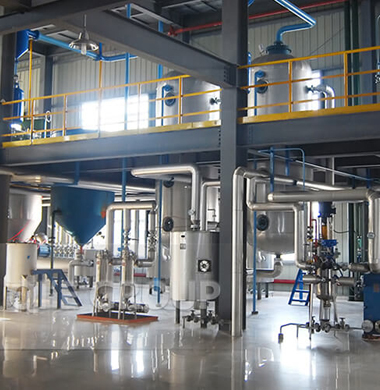
Palm Oil Refinery Plant
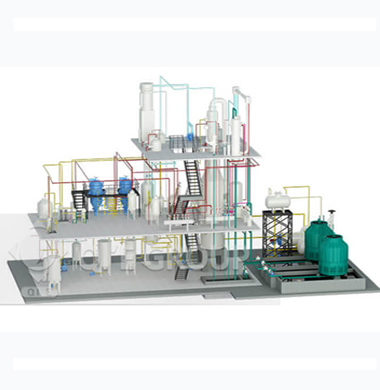
Palm Oil Fractionation Plant

Small Scale Palm Oil Processing Plant
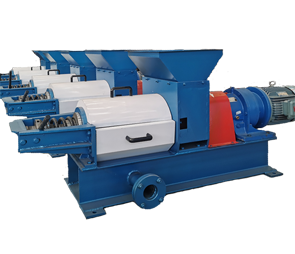
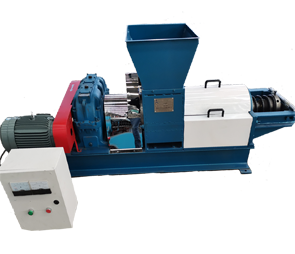
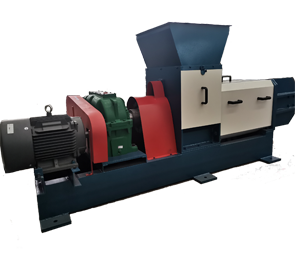
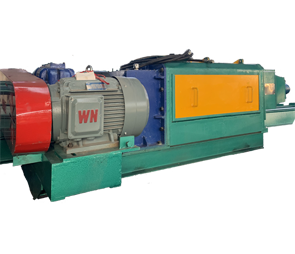
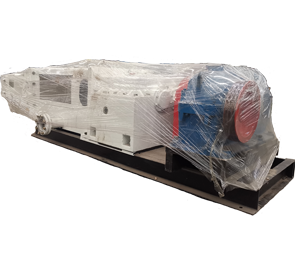
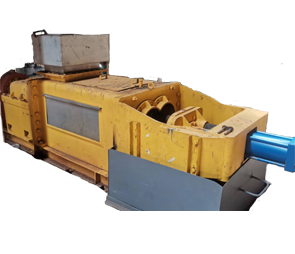
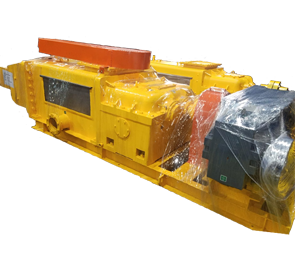
QIE Machinery offers a complete range of core equipment and related auxiliary equipment for palm oil solutions.
Whether you contact us by phone, email, or leave a message online, we will provide you with comprehensive and high-quality services.
Phone: 0086-13949113983
WhatsApp:
Email: qiea@oilpresses.org
Address: No.352 Lianhua Street, Hightech Industrial Development Zone, , Zhengzhou City,Henan Province, China