QIE Machinery
QIE Machinery
QIE Machinery
QIE Machinery

Palm oil is a highly versatile and cost-effective edible vegetable oil extracted from the reddish fruit of the African oil palm tree (Elaeis guineensis). It is unique among vegetable oils for its ability to produce two distinct types: crude palm oil, squeezed from the fleshy pulp, and palm kernel oil, obtained by crushing the stone at the fruit’s center. Naturally semi-solid at room temperature and resistant to oxidation, it is an ideal ingredient for ensuring the texture and shelf life of ultra-processed goods, ranging from snacks like biscuits and doughnuts to personal care items like shampoo and lipstick.
Palm oil refining is the critical multi-stage purification process that transforms raw, reddish crude palm oil (CPO) into a neutral, stable, and edible product suitable for global consumption. Crude palm oil contains various impurities—such as free fatty acids (FFAs), phospholipids (gums), pigments (carotenoids), and volatile odorous compounds—that limit its shelf life and affect its flavor. Through a series of specialized treatments, refiners strip away these unwanted components to produce Refined, Bleached, and Deodorized (RBD) palm oil. This process not only ensures the oil meets international safety and quality standards but also enhances its versatility, allowing it to be used in everything from cooking oil and margarines to cosmetics and biofuels.
Starting a palm oil refining business requires meticulous planning to bridge the gap between crude extraction and high-grade edible oil production. This multi-step journey involves rigorous market analysis, strategic logistical planning, and the acquisition of specialized industrial technology.
The foundation of a successful refinery is a deep understanding of the local and global demand for Refined, Bleached, and Deodorized (RBD) oil. Conduct thorough market research to identify high-value target audiences, such as food manufacturers, soap makers, and biofuel producers. A comprehensive feasibility study should include detailed financial projections, a competitive landscape assessment, and a clear definition of your product mix (e.g., liquid olein vs. solid stearin) to ensure a strong return on investment.
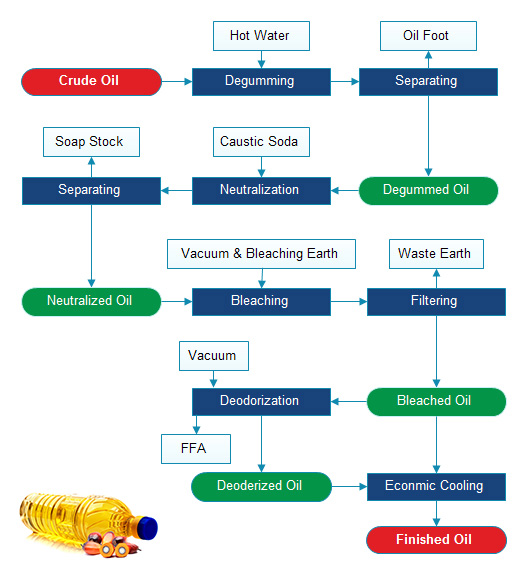
The production process of palm oil refining is a critical sequence that transforms Crude Palm Oil (CPO) into high-quality, edible product by removing impurities that affect taste, smell, and stability. This process typically follows four essential stages: degumming, deacidification (neutralization), bleaching, and deodorization.
Degumming is the initial pretreatment step designed to remove phospholipids (gums) and other colloidal impurities that can cause the oil to become cloudy or unstable during storage.
Process: Crude oil is heated to approximately 80–90°C and mixed with a small amount of phosphoric or citric acid. This precipitates the gums, which are then separated from the oil, often via centrifugation.
This stage focuses on removing Free Fatty Acids (FFAs), which cause rancidity and unpleasant flavors. There are two main methods used:
Physical Refining: FFAs are removed through steam stripping under high vacuum during the later deodorization stage. This method is preferred for palm oil because it yields more oil and generates less wastewater.
Chemical Refining: An alkaline substance (like caustic soda) is added to the oil to react with FFAs, forming soapstock, which is then separated from the oil.
Chemical vs. Physical Refining: A Comparison
| Aspect | Chemical Refining | Physical Refining |
| FFA Removal | Caustic soda neutralization | Steam stripping |
| Waste | Soapstock and wash water | FFA distillate |
| Oil Loss | Slightly higher | Lower |
| Environmental Impact | More wastewater | Less chemical use |
| Suitability | High-phosphatide oils | Low-phosphatide oils like palm |
Bleaching improves the appearance and stability of the oil by removing color pigments—primarily carotenoids—and residual trace metals.
Process: The degummed oil is mixed with an adsorbent, typically bleaching earth (activated clay) or activated carbon, under vacuum. After stirring to ensure the impurities are absorbed, the mixture passes through a leaf filter to separate the spent earth from the now-clear oil.
Deodorization is the final major step used to eliminate volatile odorous compounds and any remaining FFAs, resulting in a bland, neutral-tasting product.
Process: The oil is heated to high temperatures (240–260°C) under a high vacuum. Steam is injected to strip away the volatile substances, which are collected as Palm Fatty Acid Distillate (PFAD), a valuable byproduct for the biodiesel and soap industries.
After refining, the oil is often subjected to fractionation to separate it into liquid and solid components based on their melting points.
Process: The refined oil is slowly cooled to induce partial crystallization. It is then filtered to separate the liquid olein (widely used as cooking oil) from the solid stearin (used for margarine, shortening, and fats).
Choosing the right location is critical for minimizing the high transportation costs associated with moving heavy crude palm oil (CPO). Ideally, your facility should be situated near established CPO mills and have excellent access to road or water transportation networks for finished product distribution. The site must also have robust utility infrastructure, particularly a reliable and massive supply of water and electricity required for the energy-intensive steam refining process.
Refining operations are subject to strict environmental and food safety regulations that vary by region. You must secure a range of permits, including business registrations, land-use approvals, and environmental clearances specifically addressing waste management and emissions. Compliance with international standards, such as the Roundtable on Sustainable Palm Oil (RSPO), is often necessary to access premium global markets.
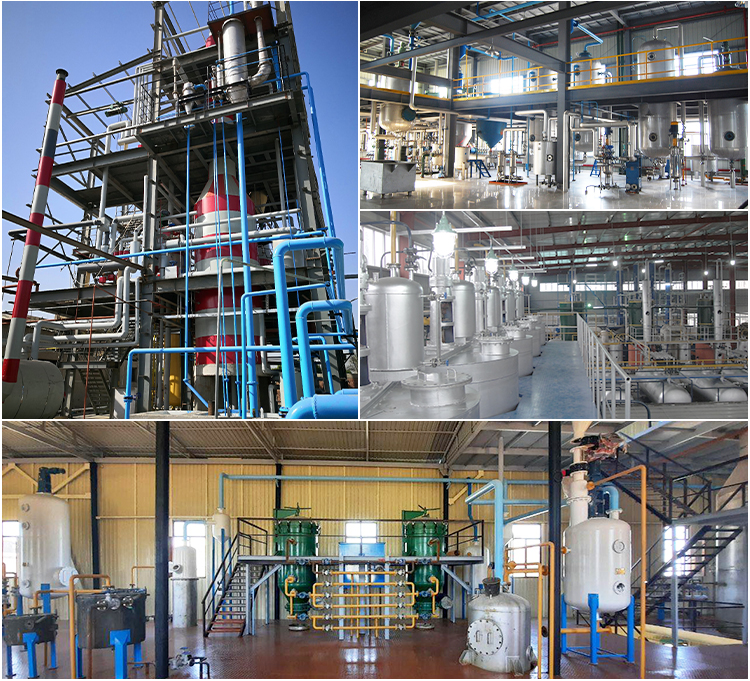
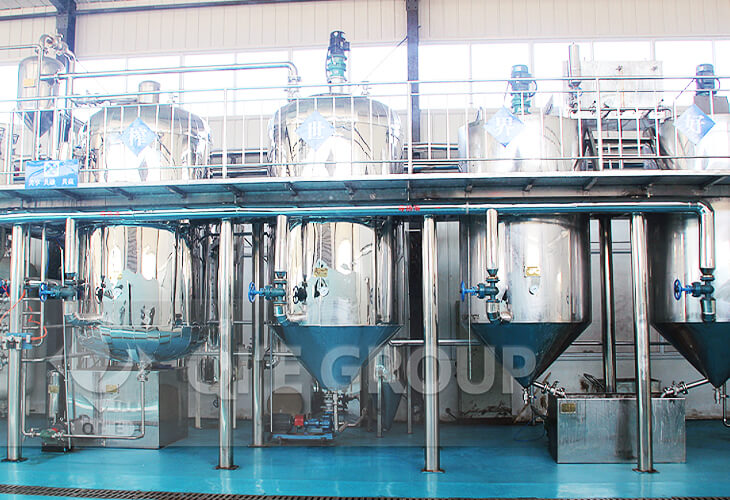
Selecting the right machinery depends largely on your planned production volume and available capital. Small-scale operators often opt for cost-effective batch refining machines (1–50 tons per day), while large-scale industrial plants utilize continuous refining technology for higher efficiency and consistency. Essential core equipment includes degumming tanks, bleaching towers, and high-temperature deodorizers, along with fractionation units if you intend to produce specialized oil fractions.
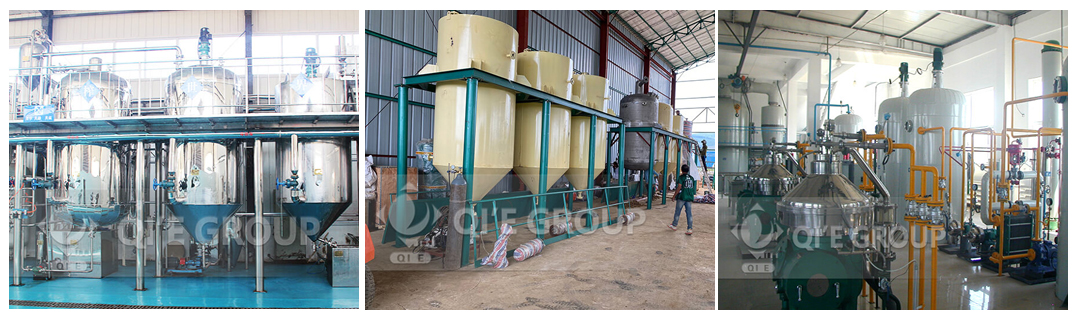
Batch Palm Oil Refining (1–20 TPD): Batch palm oil refining, typically designed for capacities ranging from 1 to 20 tons per day (TPD), is the most common entry point for mini and small-scale palm oil processing. This “intermittent” process handles a measured quantity of oil through sequential stages—degumming, neutralizing, bleaching, and deodorizing—in discrete sets rather than a continuous flow. It is favored by startups because it requires a significantly lower initial investment and less land compared to semi-continuous or fully continuous systems. While more labor-intensive and less energy-efficient than larger industrial lines, its extreme flexibility allows small producers to refine multiple types of vegetable oils using the same equipment.
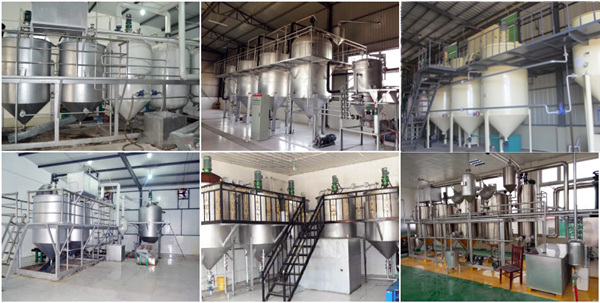
Semi-Continuous Palm Oil Refining (10–50 TPD): Semi-continuous palm oil refining, designed for medium-scale operations between 10 and 50 tons per day (TPD), serves as a sophisticated hybrid between manual batch processing and high-volume continuous systems. In this configuration, the initial stages—degumming and bleaching—are typically conducted in batches to allow for precise control over chemical dosing and reaction times, while the critical deodorization stage is handled through a continuous process. This setup is specifically engineered to improve oil quality and consistency while significantly reducing steam and energy consumption compared to pure batch systems. By automating the most energy-intensive portion of the refinery, medium-sized producers can achieve a higher “premium” grade of refined oil suitable for competitive retail markets without the massive capital expenditure required for a fully continuous industrial plant.
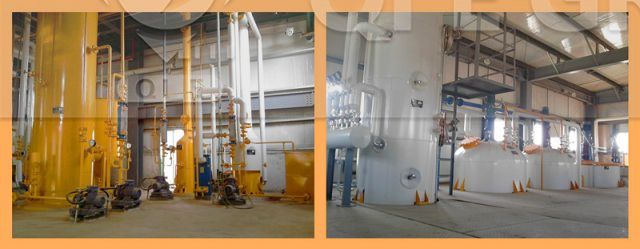
Continuous Palm Oil Refining (50+ TPD): Continuous palm oil refining, engineered for high-capacity industrial operations exceeding 50 tons per day (TPD), represents the pinnacle of modern oil processing efficiency and automation. Unlike batch systems that process oil in separate lots, a continuous refinery operates as a seamless, non-stop flow where crude palm oil enters at one end and refined, bleached, and deodorized (RBD) oil emerges at the other. This technology is characterized by its use of sophisticated centrifugal separators for chemical refining or high-efficiency physical refining towers, both designed to maximize yield and minimize neutral oil loss. While the initial capital investment is substantial, the system’s ability to run 24/7 with minimal manual intervention results in the lowest possible production cost per ton, making it the standard choice for major global suppliers and large-scale industrial manufacturers.
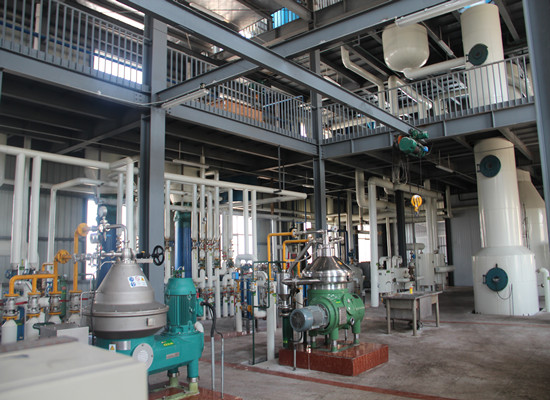
Core Refining Equipment List
A standard refinery requires a suite of specialized machines to handle the four primary stages of purification:
Maintaining a steady flow of raw materials is vital for keeping a refinery operational and profitable. Establish long-term contracts with reliable CPO suppliers and plantations to mitigate the risks of seasonal shortages. On the operational side, you must recruit and train a skilled workforce capable of managing complex machinery and maintaining strict quality control standards to ensure every batch of oil meets food-grade safety requirements.
As consumers focus more and more on health and nutrition, the demand for high quality, pure and natural palm oil continues to grow. Investing in palm oil refining project can not only meet this market demand, but also share the dividends of the health industry.
Due to the relative simplicity of the palm oil production process and the rapid market response, investors can realize the recovery of the initial investment in a relatively short period of time. This makes investors more willing to join the project, expecting to quickly get rich economic returns.
The flexibility of the palm oil refining project is also a major attraction for investors. Palm Oil Production lines of different sizes and diversified product lines can meet the needs of investors with different investment scales and risk preferences. Whether it is a small-scale business investment or a large-scale industrial investment, you can find a suitable place for yourself in this project.
QIE Group’s palm oil production equipment is well-known in the industry for its exceptional quality and competitive pricing. To better serve you, please provide detailed information regarding the scale and requirements of your palm oil refinery.Kindly let us know your production capacity, process specifications, and any specific customization needs. Once we have a clear understanding of your requirements, we will provide a tailored solution and a free quote!


Palm Oil Production Line
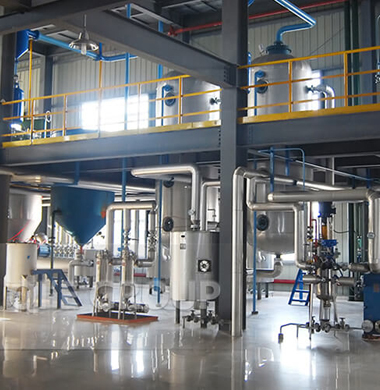
Palm Oil Refinery Plant
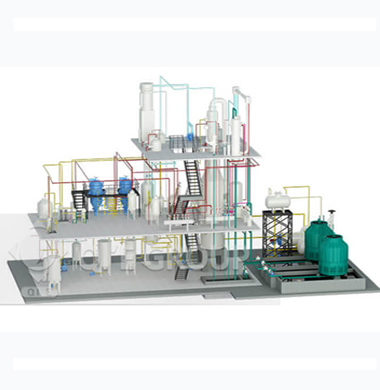
Palm Oil Fractionation Plant

Small Scale Palm Oil Processing Plant
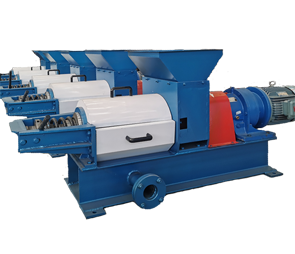
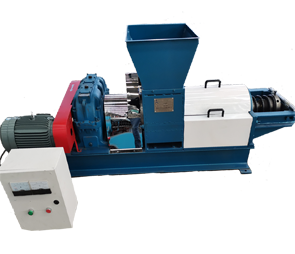
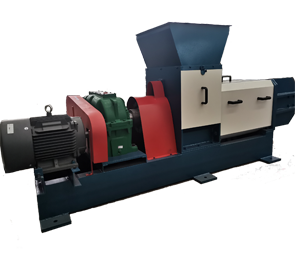
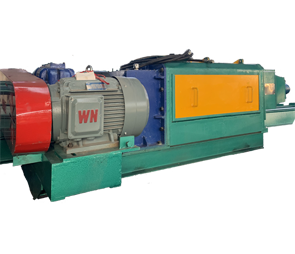
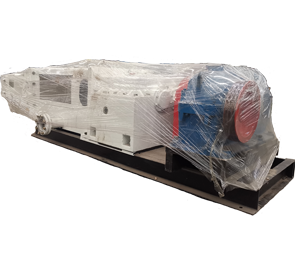
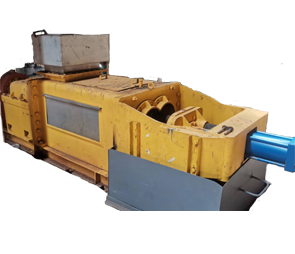
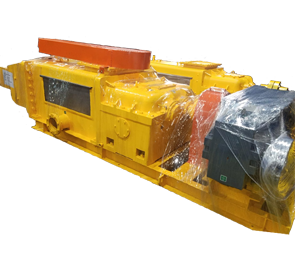
QIE Machinery offers a complete range of core equipment and related auxiliary equipment for palm oil solutions.
Whether you contact us by phone, email, or leave a message online, we will provide you with comprehensive and high-quality services.
Phone: 0086-13949113983
WhatsApp:
Email: qiea@oilpresses.org
Address: No.352 Lianhua Street, Hightech Industrial Development Zone, , Zhengzhou City,Henan Province, China