QIE Machinery
QIE Machinery
QIE Machinery
QIE Machinery

Palm oil is a popular edible oil extracted from the fruit of oil palm trees. Oil palm (Elaeis guineensis) is a plant native to west and central Africa that yields two types of oils – palm oil from the fruit and palm kernel oil from the seed. QIE Group is a professional manufacturer and supplier of small scale palm oil processing line including palm oil extractor and machine for chemical refining of palm oil. If you are planning to invest in a small scale palm oil mill plant factory in ghana, some machines that can be replaced to save equipment cost. Our professional engineer team will help you make the best palm oil mill plant solution and also offer the best price.
In Ghana, small-scale operations dominate the palm oil industry, accounting for 60% to 80% of national production. Modern small scale processing lines (typically ranging from 300 kg/h to 2 tons per hour) replace inefficient, hazardous traditional methods with mechanized lines that significantly increase oil yield, improve purity, and save labor.
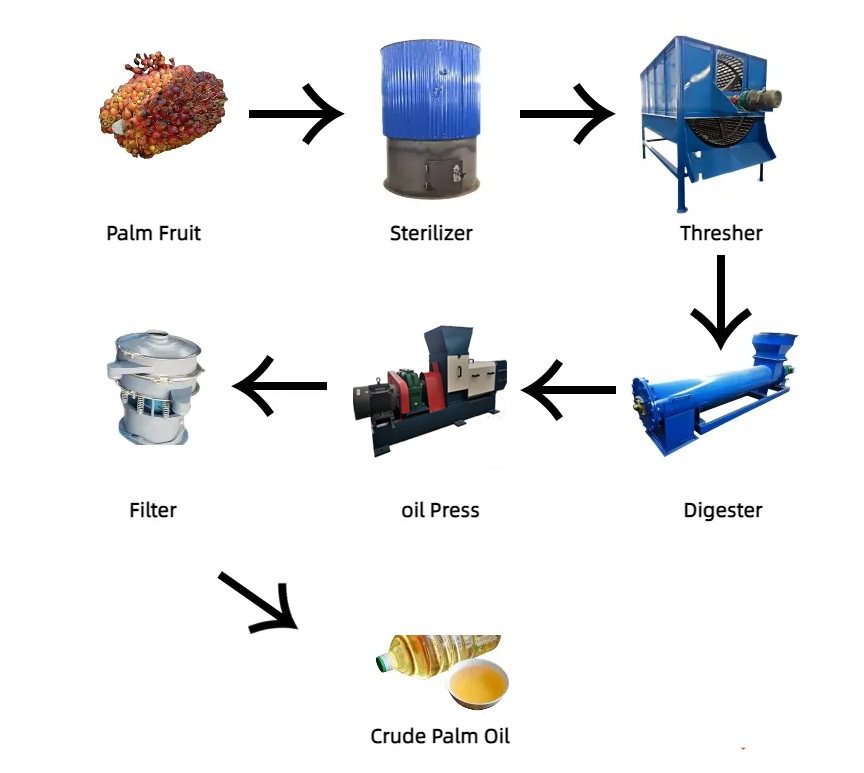
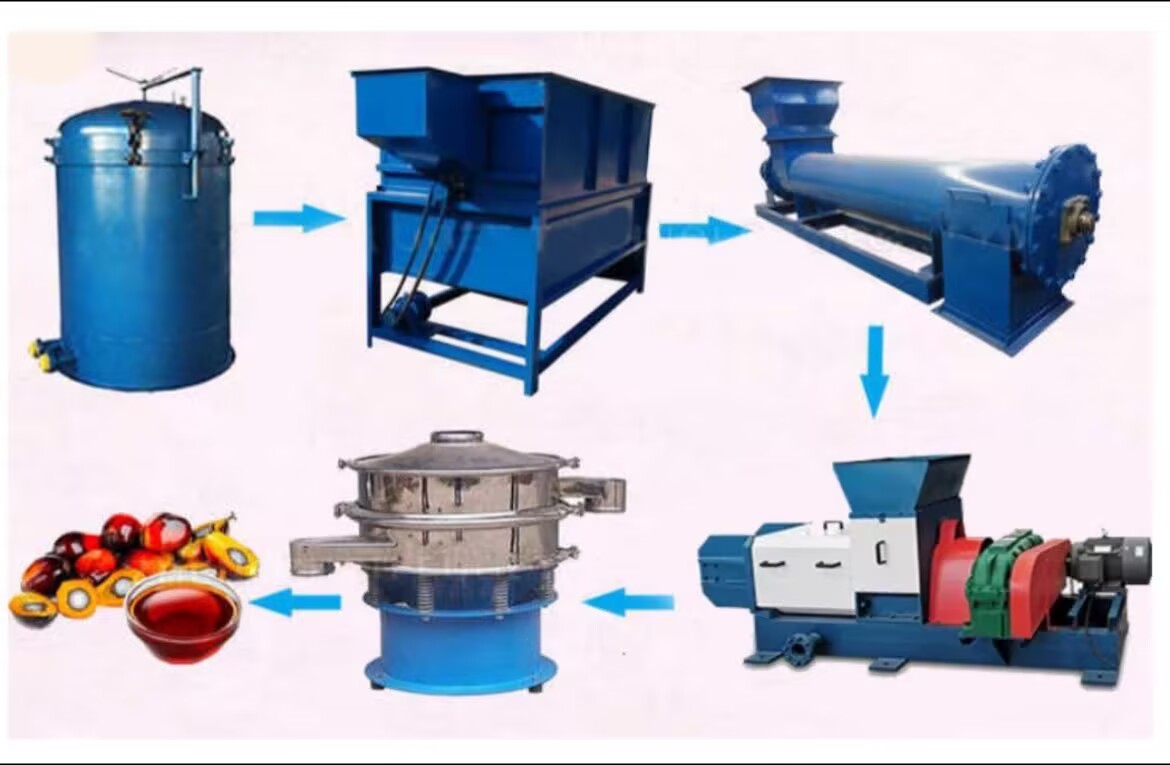
A standardized mechanical processing line uses specific machinery to optimize oil extraction:
Fruit Reception: Fresh Fruit Bunches (FFB) must be weighed and processed within 24 to 48 hours of harvest to stop fatty acid enzymes from degrading the oil quality.
Sterilization: FFBs are steamed in a cooking tank for about 60 minutes. This softens the fruit, deactivates harmful enzymes, and makes threshing easier.Threshing: A mechanical drum thresher or stripper separates the sterilized palm fruits from the empty fruit bunches (EFBs).
Digestion: The separated fruits are transferred to a heated mashing vessel where the pulp is broken down and separated from the internal nut.
Pressing: A specialized twin-screw or single-screw palm oil press squeezes the digested mash to extract a mixture of crude red palm oil, water, and solid fibers.
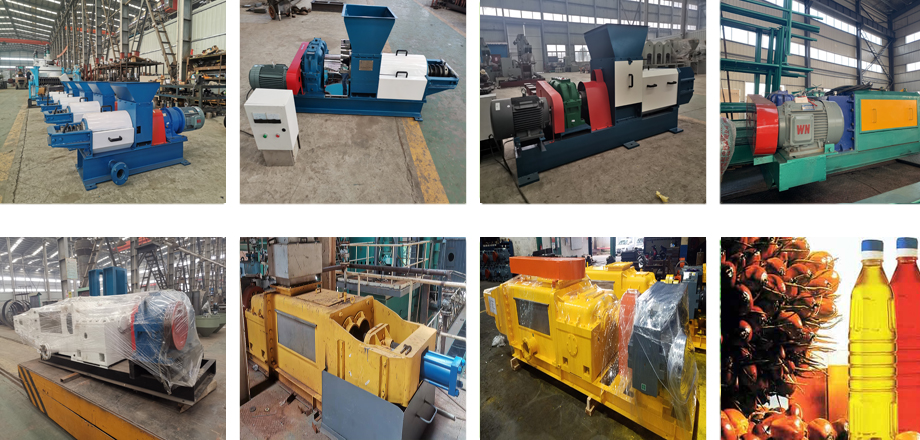
Clarification: The crude liquid mixture passes through a vibrant screening machine and a vacuum filtration or settling tank to isolate pure red palm oil from water and sludge.
Kernel Recovery: The remaining solid press cake is separated into fiber (reused as boiler fuel) and clean palm nuts. The nuts are cracked to harvest valuable palm kernels for secondary palm kernel oil (PKO) processing.
Establishing a palm oil factory in ghana requires a substantial investment. The exact cost will depend on the size and scope of the factory, as well as the resources and technology employed. The costs of land, construction, machinery, labor, and other inputs must all be taken into account. Additionally, the cost of obtaining the necessary permits and licenses, as well as the cost of training staff, must also be factored in. Finally, ongoing operational costs, such as the cost of raw materials, energy, and maintenance must be taken into consideration. With all of these costs factored in, setting up a palm oil factory can be a costly endeavor.
Palm oil processing produces byproducts including empty fruit bunches, palm kernel shells, palm kernel cake, press fiber residue, and wastewater.
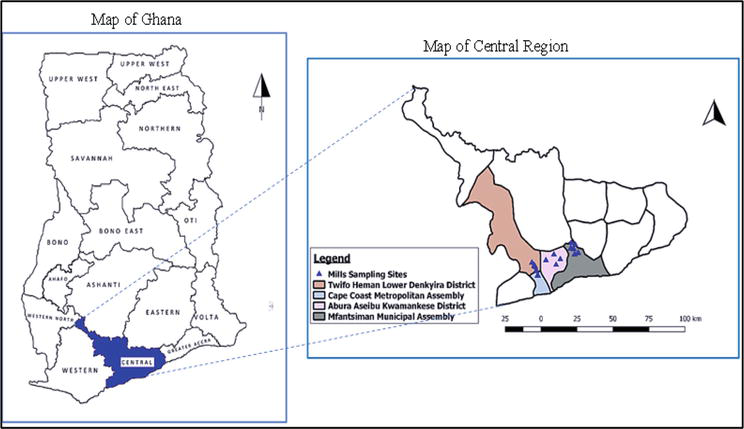
The study was conducted in the Central Region of Ghana, which is one of the sixteen (16) first-level government administrative units of Ghana. There is only one functional large-scale palm oil processing plant in the Central Region. This affords small-scale mills the opportunity for greater access to oil palm for processing. Twenty-five (25) small-scale processing mills were selected from four (4) palm oil processing Metropolitan, Municipal and District Assemblies (MMDA) namely Cape Coast Metropolitan Area (CCMA), Abura Aseibu Kwamankese District (AAKD), Twifo Hemang Lower Denkyira District (THLDD) and Mfantseman Municipality (MfM) all in the Central region of Ghana. The MMDAs were strategically selected to ensure agro-ecological balance (forest zone, transition zone, and coastal savanna zone). A map showing the study area and location of the selected small-scale processing mills is presented.
Establishing a small scale palm oil pressing production line in Ghana offers a highly valuable source of income. Given the immense market demand for palm oil, you can generate substantial profits within the local market or in surrounding small to medium-sized markets. Palm oil is highly versatile and is widely utilized in the pharmaceutical, cosmetic, and food manufacturing industries, as well as in numerous other related sectors.
What is the typical oil yield from a small scale palm oil processing line?
Modern mechanical lines achieve an extraction efficiency of 18% to 22%. For every 1 ton (1,000 kg) of Fresh Fruit Bunches (FFB) processed, you can expect to yield approximately 180 kg to 220 kg of pure crude red palm oil, depending on fruit quality.
How much space is needed to set up the machinery?
A basic 1-ton-per-hour (tph) processing line requires a concrete workshop floor space of 100 to 150 square meters. You must also budget additional exterior yard space for fruit reception, loading docks, and waste storage.
Can the same line process palm kernel oil (PKO)?
No. Red palm oil is pressed from the soft outer pulp (mesocarp). Palm kernel oil (PKO) requires completely different equipment, including a kernel cracker, shell separator, roaster, and a heavy-duty high-pressure PKO screw press.
How many workers are needed to run a small scale palm oil mill?
A semi-automated 1-tph processing line requires 4 to 6 operators per shift. Tasks include manual fruit feeding, boiler monitoring, oil collection, and clearing fiber waste.
What licenses are required to operate legally in Ghana?
To run a commercial palm oil processing mill, you must acquire permits from:
Registrar General’s Department: For business registration.
Environmental Protection Agency (EPA): For waste and POME management approval.
Food and Drugs Authority (FDA): For food-grade hygiene and consumer safety certification.
Local District Assembly: For building and land-use permits.


Palm Oil Production Line
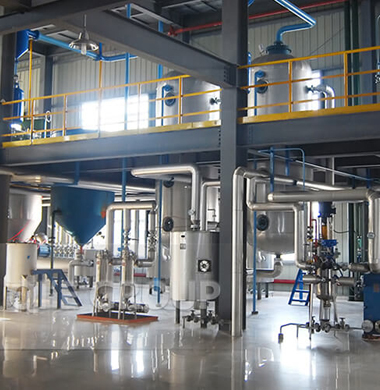
Palm Oil Refinery Plant
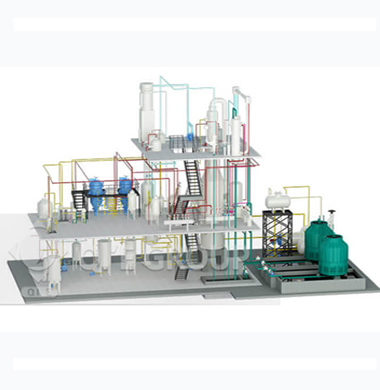
Palm Oil Fractionation Plant

Small Scale Palm Oil Processing Plant
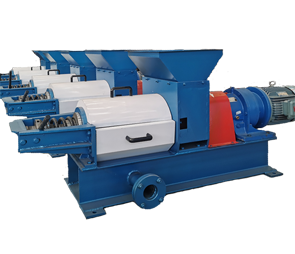
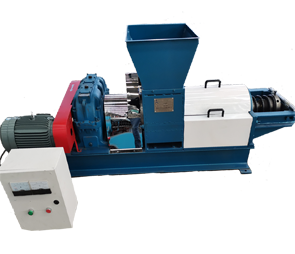
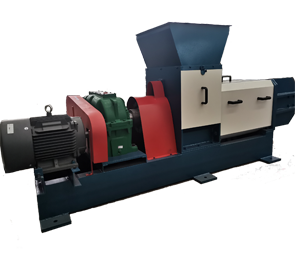
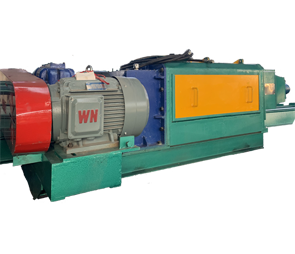
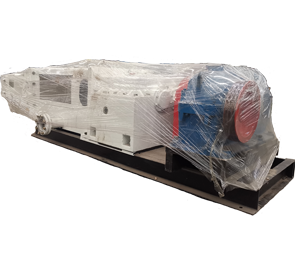
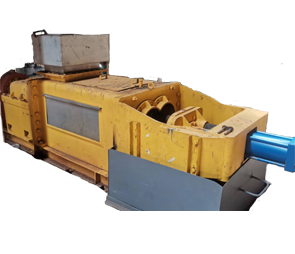
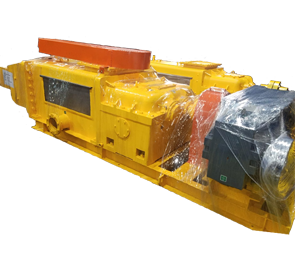
QIE Machinery offers a complete range of core equipment and related auxiliary equipment for palm oil solutions.
Whether you contact us by phone, email, or leave a message online, we will provide you with comprehensive and high-quality services.
Phone: 0086-13949113983
WhatsApp:
Email: qiea@oilpresses.org
Address: No.352 Lianhua Street, Hightech Industrial Development Zone, , Zhengzhou City,Henan Province, China