QIE Machinery
QIE Machinery
QIE Machinery
QIE Machinery

Cameroon is the third-largest palm oil producer in Sub-Saharan Africa. However, it still faces an annual structural deficit of over 100,000 metric tons, which is currently filled by costly imports. Smallholder farmers and local small-scale artisanal and semi-mechanized mills account for more than 50% of the domestic production capacity. This layout makes a semi-automated, small-scale processing line highly lucrative.
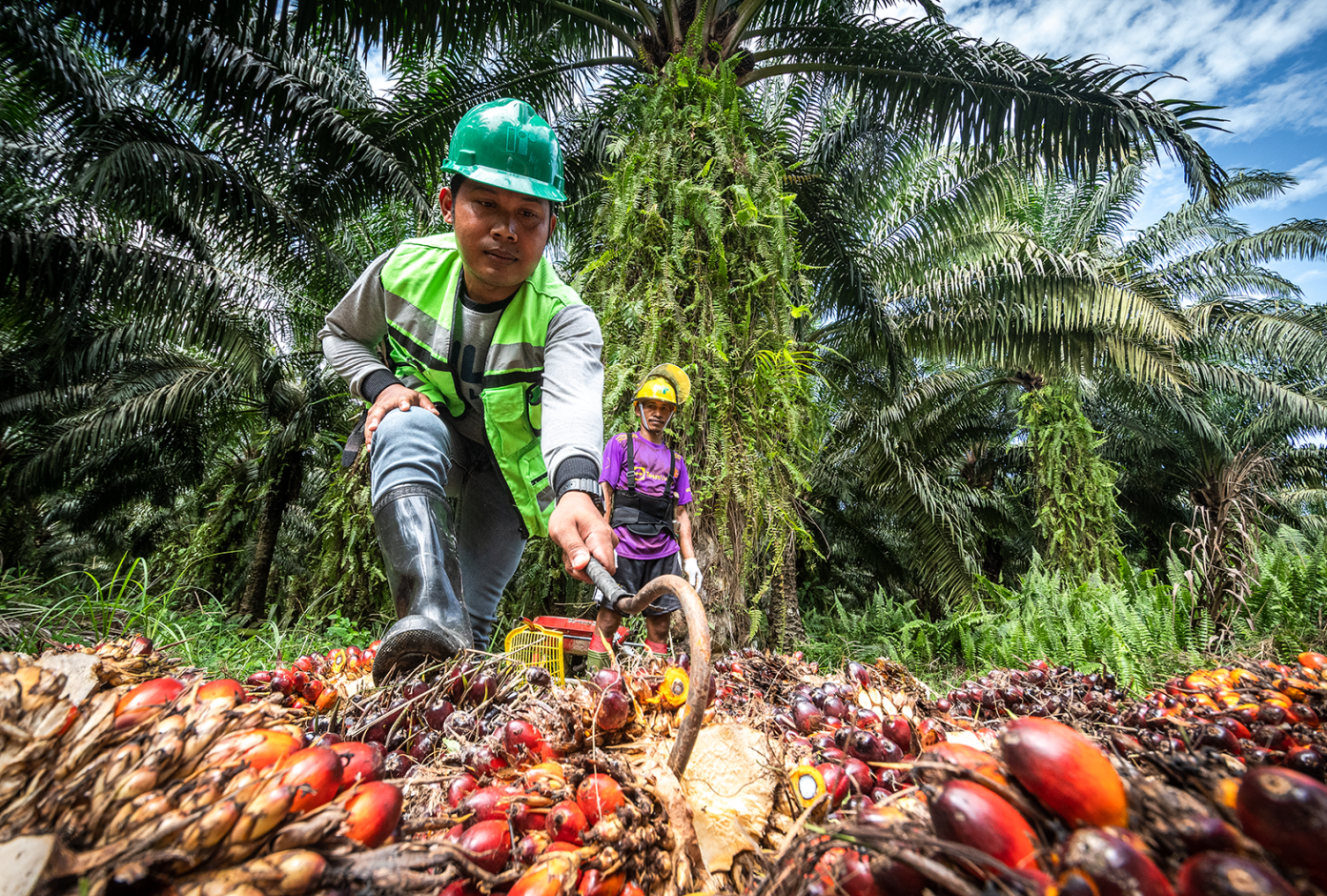
A standard small-scale palm oil processing line ranges from 1 to 5 Tons of Fresh Fruit Bunches (FFB) per hour. Unlike other oilseeds, palm fruit must be processed within 48 hours of harvest to prevent Free Fatty Acid (FFA) levels from spiking, which degrades the oil quality.
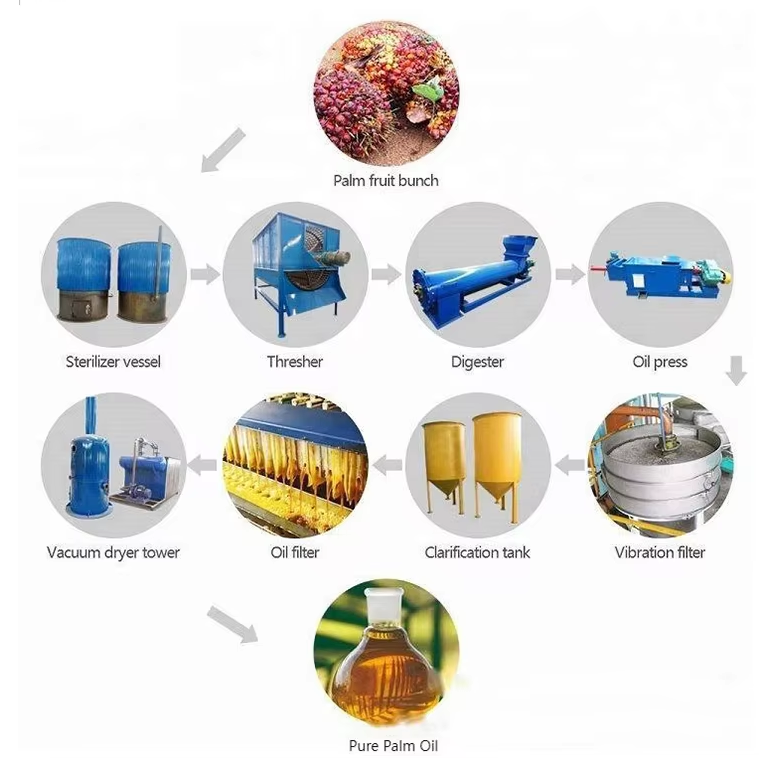
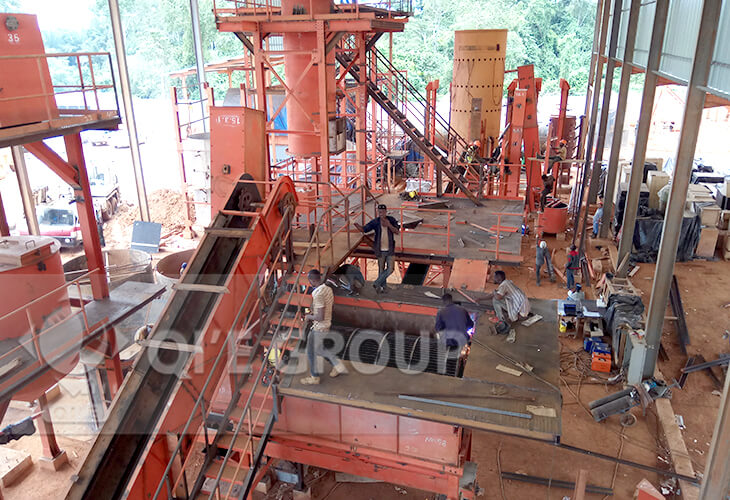
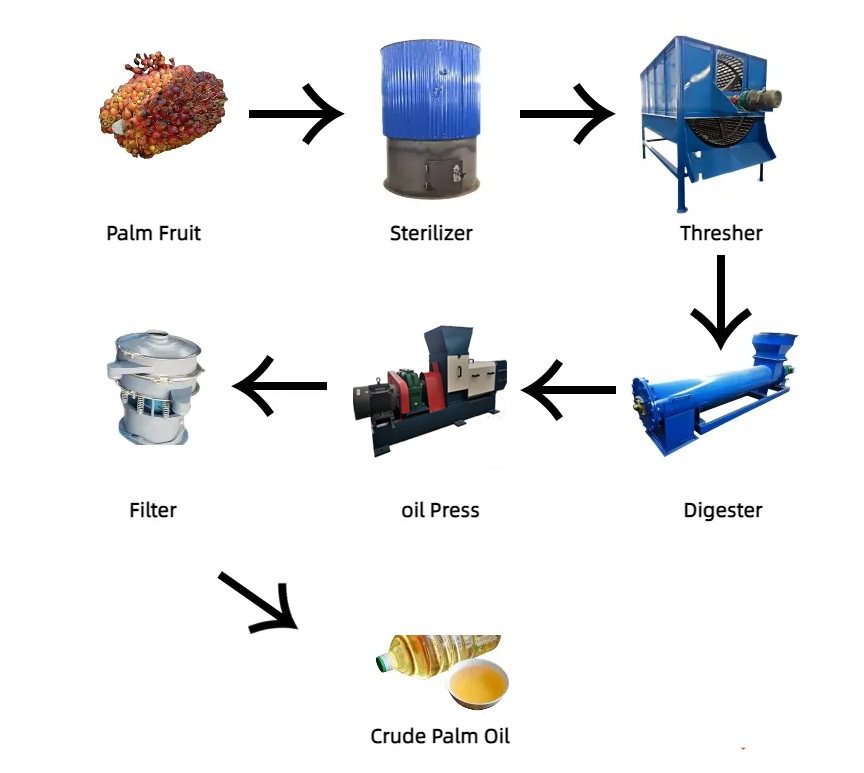
Palm oil processing line is a complex process which includes palm fruit reception station, palm fruit sterilizing station, palm fruit threshing station, palm fruit digesting & pressing station and palm oil clarification station. Each palm fruit station works together can maximize the extraction of palm oil.
Fresh Palm Fruit Reception: It is used for temporary storage and unloading fresh palm fruit bunches from palm plantation.
Palm Bunch Sterilization with the aid of steam: this loosens the oil-containing fruit from the bunch and inactivates lipid-degrading enzymes as well as micro-organisms that naturally occur in FFB.
Palm Fruit Threshing, bunch stripping which separates the fruit from the bunch stalk and spikelets. In this process, the byproduct Empty Fruit Bunch (EFB) is produced..
Palm Fruit Digestion to crush and disrupt the mesocarp (pulp), with the aid of steam.
Palm Fruit Oil Pressing of the digested fruit to extract the oil from the mesocarp fibre. In this process, two fractions are produced: raw oil and a residue, containing palm oil fibres and nuts.
Clarification and drying: The crude palm oil is separated from the mixture of oil, water and solid impurities by clarifying equipment, and other impurities are removed.
Crude Palm Oil Refining: The deacidified palm oil is refined, including bleaching, deodorization, dehydration and other processes to further improve the quality of the palm oil.
crude oil degumming (salt washed) — – acid (alkali) – dephosphorization acid (refined), decoloring, bleach earth/ clay adsorption, dehydration (heating drying) deodorization ( vacuum distillation) — dewaxing –get National standard first level refined oil :
1,degumming: Remove the colloid (mainly phospholipids) from the wool oil
2,decolorizing:Take the adsorption decolorization method to remove pigment in hair oil
3,deodorization:The odor material deodorization can remove hair oil
4,Take off the wax:The temperature is below 25 °C, good to take off the wax effect can be achieved after refining treatment , the colour and lustre of the oil is transparent, the oil will be stored for a long time there is no precipitation in it . When fried or deep fried the pan doesn’t have a foam, there is no lampblack, reached to the standards for edible oil, can be directly filling to sale in the market , suitable for processing and small-scale oil processing plan.
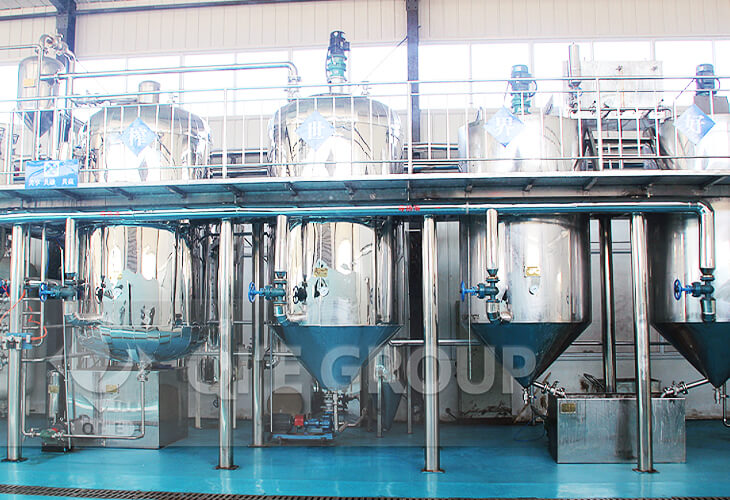
How to use the refiner?
1.Pour the filtered oil into the first mixing tank(Note: the height of oil must over the heating tube)
2.Turn on the mixing switch ,the rotate speed at 45-55 RPM(revolution per minute ) (note: there is a nob on the side of the electricity box to adjust the rotating speed).
3.Turn on the heating switch,set the temperature of temperature-controlled meter to 62 degrees.
4.Pour the prepared citric acid solution into the stirring tank slowly when the temperature reaches 62 degrees (the ratio of citric acid to water is 50kg water to 2.5kg citric acid, and the ratio of oil to citric acid solution is 50kg oil and 0.5-1.5kg citric acid solution, the temperature of water must be between 80 -100 degrees)
5. Turn off the heating and stirring switches after 30 minutes . After 30-60 minutes of natural precipitation, remove impurities from the rubber outlet until clean oil is discharged from the rubber outlet, then close the rubber outlet.
6.Turn on the stirring and heating switches , set the temperature to 110 degrees. Wait 30-60 minutes after the temperature reaches 110 degrees,take a small sample to test in the pot,confirm if there is any water in the oil. (Note: the method of testing water content:pour the refined oil to pot ,then heat the pot. If there is no water in the oil, you cannot hear the noise of water.) If still have water, continue to heat until the sample have no water. Then turn off stirring and heating switches.
7.When the oil temperature naturally drops to about 80 degrees, set the oil pump switch and filter the oil into the filter tank. (Note: At the beginning of the filtration, a part of mixed oil will come out. Note that there is a three-way valve under the box. When make the wrench and the pipe form an angle of ninty degree,he oil will return to the first stirring tank.Until the mixed oil is clear,make the wrench and the pipe in a straight line,the oil will enter the finished product tank).
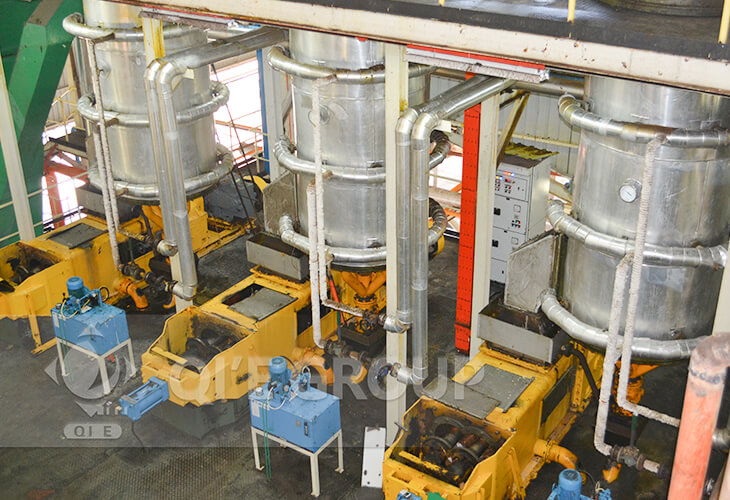
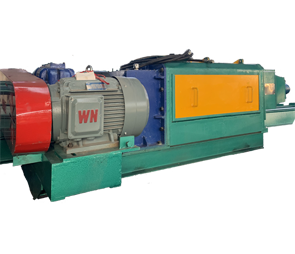
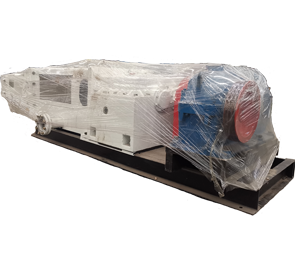
This is a palm oil press machine designed and manufactured by QIE Machinery according to the characteristics of palm fruits. The gap between the worm and the distance between the worm and the barrel are carefully designed, while the oil press is made of wear-resistant alloy steel, which ensures the smooth production process of palm oil and also ensures that the palm kernel is well preserved for deep processing.
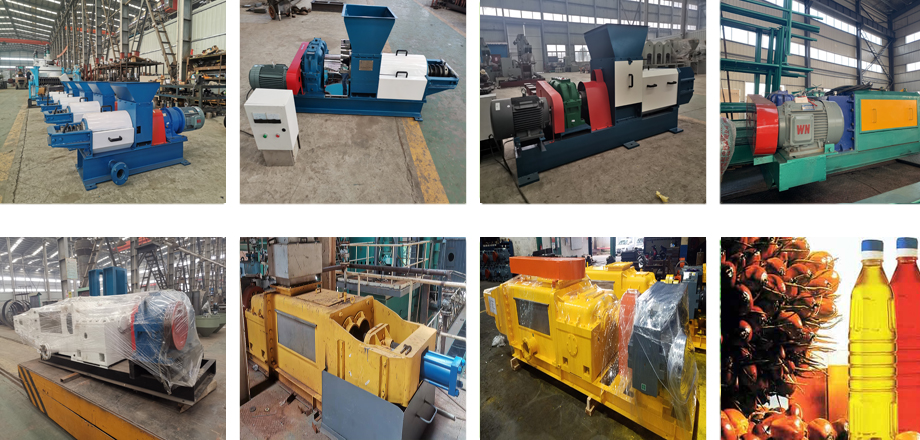
Operating procedure for twin screw palm oil press
Before producing palm oil with single screw palm oil press machine, the palm fruit bunches should be processed first. Separate the palm fruits from the palm fruit bunches first, and then sterilize them, so that it can be easier to extract palm oil from palm fruits with high pressing efficiency.
When producing palm oil, the single screw palm oil press is started first, and the palm fruits are conveyed into the feeding hole of the press for pressing. At the beginning of pressing, it is necessary to manually adjust the pressure of the press chamber according to the situation of cake output, so that the pressing effect can reach a good result. After pressing, you can get the crude palm oil.
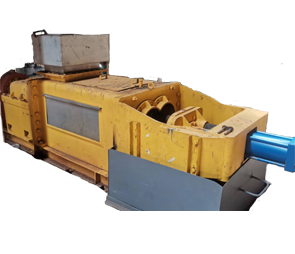
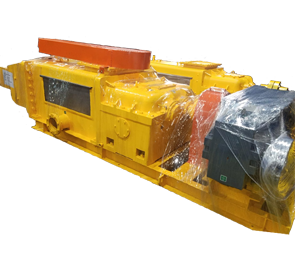
Double screw palm oil press machine is suitable for oil pressing equipment in large and medium-sized palm oil production line, which can extract palm oil from palm fruits with capacity of 5TPH,10TPH and 15TPH respectively.
Main structure of double screw palm oil press
The main structure includes mainframe, press cage, press screw, hydraulic control system, motor, gear box, reducer and other parts. Among them, the hydraulic control system is the main and highlight of the double screw palm oil press, which can adjust the pressure in the press cage according to the situation of palm pressing, so that the palm oil pressing process goes smoothly.
The palm oil industry in Cameroon represents a highly strategic and dynamic sector of the national economy, characterized by a persistent structural supply gap and surging domestic demand. As the third-largest producer in Sub-Saharan Africa, Cameroon benefits from ideal agro-ecological conditions across major hubs like the Littoral, South-West, and Center regions; yet, the country faces a chronic annual deficit exceeding 100,000 metric tons, forcing heavy reliance on expensive imports. This production shortfall is primarily driven by the dominance of traditional, low-yielding artisanal processing methods used by smallholders, who manage over 70% of the country’s oil palm acreage. To curb this deficit, the Cameroonian government actively encourages local agro-industrial modernization through tax incentives and agricultural subsidies. Backed by a rapidly growing urban population, rising household consumption, and soaring demand from local soap manufacturers and food processors in cities like Douala and Yaoundé, modern small- and medium-scale palm oil processing plants are uniquely positioned to capture a highly profitable and resilient domestic market.
What is the typical oil extraction rate (OER) for a small-scale mechanical line?
A mechanical line achieves an OER of 18% to 22%. Traditional artisanal manual milling methods in Cameroon only achieve 10% to 13%. Upgrading to a mechanical press yields nearly double the oil from the same amount of fresh fruit.
Why must palm fruit be processed within 48 hours of harvesting?
After harvest, enzymes in the fruit rapidly break down the oil. This spikes the Free Fatty Acid (FFA) levels. If the fruit sits longer than 48 hours, the FFA level climbs past 5%, turning the oil sour, dark, and unsuitable for premium food processing or soap manufacturing.
What is the difference between CPO and PKO?
Crude Palm Oil (CPO): Pressed from the red, fleshy outer pulp (mesocarp). It is used for cooking oil and industrial soap making.
Palm Kernel Oil (PKO): Pressed from the white seed inside the hard inner nut. It commands a higher market price and is highly sought after by cosmetics and specialized chemical factories.
How much land do I need to supply a 1 Ton per Hour (TPH) line?
A 1 TPH line processing 8 hours a day needs about 8 tons of fruit daily. Given average Cameroonian smallholder yields, you will need a sourcing network or personal plantation of roughly 300 to 500 hectares of mature oil palm trees to keep the mill running sustainably.
Can I use processing waste to power my factory?
Yes. A major advantage of palm oil processing is its zero-waste potential. The press fiber and cracked nut shells can be burned directly as solid biomass fuel for your sterilization boiler, drastically lowering daily diesel or electricity costs.
Where are the best locations to set up a processing mill in Cameroon?
The highest concentrations of smallholder plantations and ideal growing weather are located in the South-West, Littoral, Center, and South regions. Siting your mill in towns near these hubs minimizes fruit transport times and shipping costs.


Palm Oil Production Line
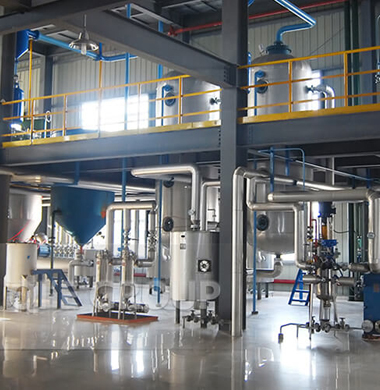
Palm Oil Refinery Plant
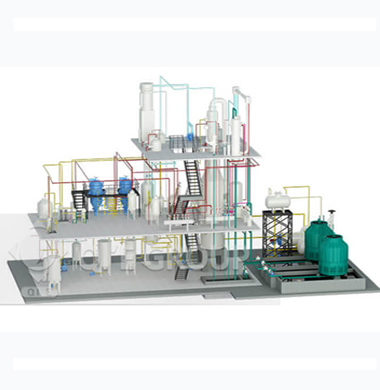
Palm Oil Fractionation Plant

Small Scale Palm Oil Processing Plant
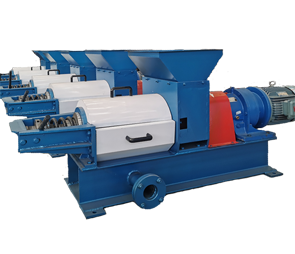
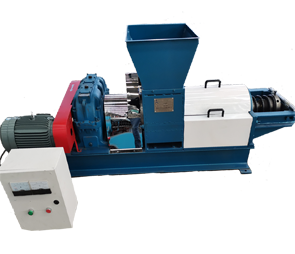
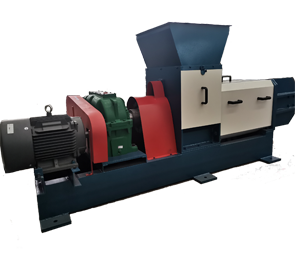
QIE Machinery offers a complete range of core equipment and related auxiliary equipment for palm oil solutions.
Whether you contact us by phone, email, or leave a message online, we will provide you with comprehensive and high-quality services.
Phone: 0086-13949113983
WhatsApp:
Email: qiea@oilpresses.org
Address: No.352 Lianhua Street, Hightech Industrial Development Zone, , Zhengzhou City,Henan Province, China