QIE Machinery
QIE Machinery
QIE Machinery
QIE Machinery

The palm fruit sterilizer is a crucial piece of equipment in a palm oil mill that uses high-temperature steam to deactivate enzymes, soften the fruit, and prepare it for the next processing stages. This process is essential for maintaining crude palm oil quality and maximizing oil extraction efficiency.
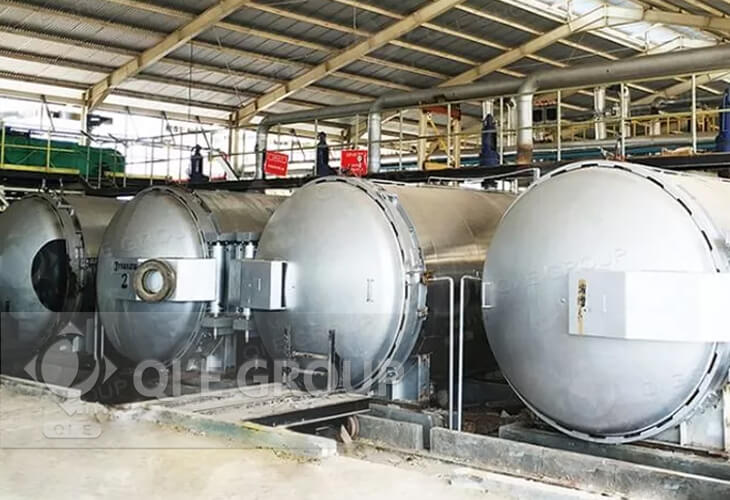
Palm fruit sterilizer is the main equipment in palm oil mill. The type of sterilizer technology utilised in the palm oil mill greatly affects steam and power demand, and performance of the sterilization process. In general, palm fruit sterilizer can be diveided into three kinds: Horizontal sterilizer, Vertical sterilizer, Tilting sterilizer.
Horizontal sterilizer occupies large area and more steam consumption.
Vertical sterilizer is cost low steam consumption and save energy, also occupy less space.
Tilting sterilizer, is is more flexible, energy saving.
The horizontal sterilizer is the most commonly used sterilizer in palm oil mills. When disposed in a horizontal position, the cylindrical vessel sterilizer has fairly good disposition because the oil palm fresh fruit bunches placed in cages with a low stacking height are more uniformly spread out in this position across the length of the elongated vessel, as opposed to a vertical sterilizer. Thus, when pressurized steam is injected into the interior of the horizontally positioned cylindrical vessel, the steam can reach out to different directions and corners of the contents within the cages thereby helping treatment of the fruit bunches. Due to the low stacking height of the fruit bunches in the cages, condensate drains out freely from the fruit bunch stack facilitating heat penetration. The low stacking height also limits fruit bunch compression that facilitates low oil loss from the fruits during sterilisation.
Vertical sterilizers are available in several variations where fresh fruit bunches are placed directly into a tall vertical vessel without steel cages. The vertical sterilizer is considered for use in palm oil mills where space saving is important. Vertical sterilizers are much cleaner and easier to operate than conventional sterilizers.
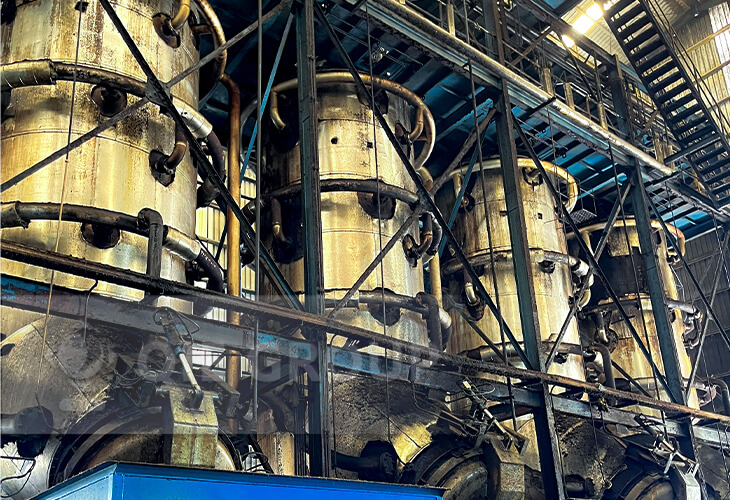
Another type of sterilizer technology, the Tilting sterilizer eliminates much of the machinery associated with conventional sterilizers. The technology is the latest design that offers improved milling efficiency, and reduced labour and maintenance cost.
Sterilization is the first critical step in processing fresh fruit bunches (FFBs) after reception. Its primary functions are:
Enzyme Inactivation: The high heat deactivates lipase enzymes in the fruit that would otherwise rapidly increase the Free Fatty Acid (FFA) content, which lowers the oil’s quality and commercial value.
Fruit Softening: Steam softens the fruit pulp (mesocarp) and loosens the fruitlets from the bunch stalks, making subsequent threshing, digesting, and pressing more efficient.
Improved Oil Extraction: Softened cell walls allow oil to flow out more easily during pressing, increasing the overall oil yield.
Hygiene and Safety: High temperatures kill bacteria and mold, ensuring a more stable and hygienic final product.
Nut Conditioning: The process helps condition the palm nuts for later cracking and kernel recovery.
* The heat treatment helps destroy oil-splitting enzymes and seizes hydrolysis and autoxidation.
* In large scale palm oil mill plant, where the fresh fruit bunches (FFBs) need to be cooked whole, the steam weakens the stem of the fruit and reduces the effort required to get the fruit from the bunch with mere tumbling in the threshing machine or shaking.
* The heat is very important since it assists in solidifying proteins that contain the oil-bearing cells that are microscopically dispersed in it. This process of protein solidification/coagulation enables the oil bearing cells to collect together and flow with much ease when pressure is exerted.
* Further, the fruit is subjected to cooking to weaken the pulp structure, make it soft and easy to remove the fibrous material and its components during the process of digestion. High heat is recommended to partially disband the oil containing cells found in the mesocarp and further allows the oil to flow more readily. This stage of processing is very important.
* During sterilization, the moisture produced by the steam helps to chemically disintegrate the gums and resins. If this is not done, the resins and gum will cause foam during frying. Since part of the resins and gums are soluble in water, you can choose to apply wet steam to dissolve them in water such that they can be easily removed during clarification. Even the starch contained in the fruit can be hydrolyzed and removed in the same way.
* High-pressure steam is recommended for sterilization to cause the (warm air) moisture in the nuts to expand. Reducing the pressure causes contraction of the nuts and detachment of the kernels within their shells.
* After detaching the kernel from its shell wall, the nut cracking operation then begins. This clearly demonstrates that sterilization is therefore the most important process here. It is a pre-requisite for the success of all other palm oil processing processes.
* On high-pressure steam heating, the sterilization systems causes the bunches to loosen the fruits. This is critical because it helps the palm fruit bunches loose less water during the process.
What is the primary function of a palm fruit sterilizer?
The main functions are to inactivate the lipase enzymes that cause rapid Free Fatty Acid (FFA) buildup, soften the fruit pulp (mesocarp), and loosen the fruitlets from the bunches for easier processing.
Why is sterilization so important for oil quality?
Fresh palm fruits contain enzymes that, when activated (e.g., through bruising during harvest/transport), rapidly break down the oil’s triglycerides into FFAs, which lowers the oil’s commercial value. Sterilization with heat deactivates these enzymes, ensuring the final crude palm oil meets quality standards.
What temperature and pressure are typically used?
Conventional steam sterilization typically operates at temperatures around 130–140 °C (266–284 °F) and pressures of approximately 2.5–3.2 barg (36-46 psi).
How long does the sterilization process take?
A typical batch sterilization cycle (door-to-door) usually takes between 60 and 90 minutes, though this can extend to 110 minutes depending on the load size and specific processing method (e.g., a “three-peak” cycle).
What are the main types of sterilizers?
There are generally two main types of sterilizers used in mills:
Horizontal Sterilizers: These are traditional batch systems for large-scale mills, using rail carts. They cover a large area and require more manual labor.
Vertical Sterilizers: These are more compact, space-saving batch options, often with a higher degree of automation. They are popular for medium-scale mills.
Continuous sterilizers also exist, using a steady flow of fruit on conveyors.
Does sterilization affect the nutritional content of the oil?
Yes, the high temperatures used in conventional sterilization can degrade some phytonutrients, such as carotenoids. Research is ongoing into lower-temperature methods (like cold-pressing or supercritical CO2) to preserve these compounds.
What are common issues with the sterilizer?


Palm Oil Production Line
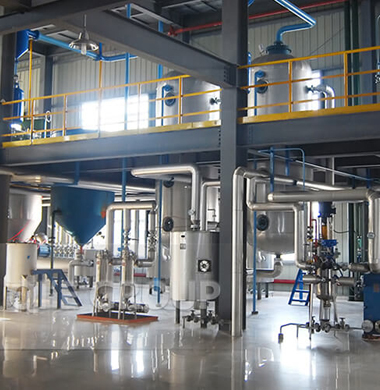
Palm Oil Refinery Plant
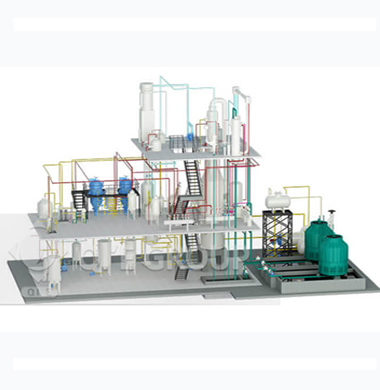
Palm Oil Fractionation Plant

Small Scale Palm Oil Processing Plant
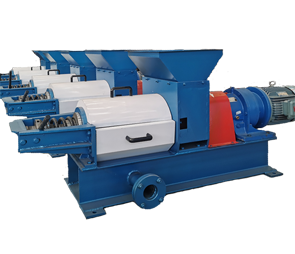
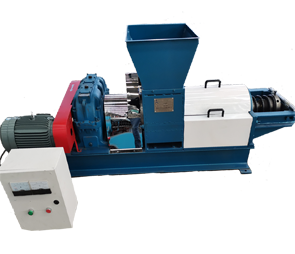
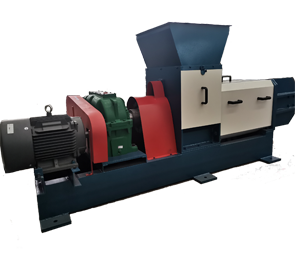
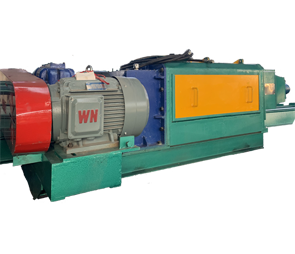
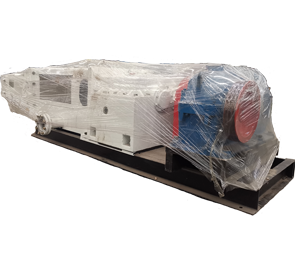
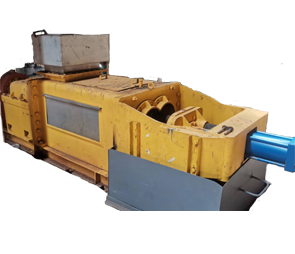
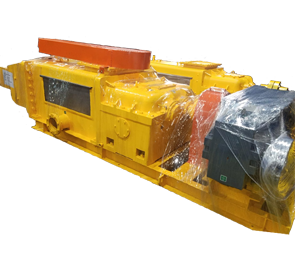
QIE Machinery offers a complete range of core equipment and related auxiliary equipment for palm oil solutions.
Whether you contact us by phone, email, or leave a message online, we will provide you with comprehensive and high-quality services.
Phone: 0086-13949113983
WhatsApp:
Email: qiea@oilpresses.org
Address: No.352 Lianhua Street, Hightech Industrial Development Zone, , Zhengzhou City,Henan Province, China